
Moving into a new property in Dubai involves more than signing a tenancy agreement. Before tenants can comfortably occupy their home, essential utilities such as electricity and water must be activated. One of the most important steps in this process is linking Ejari to DEWA, as tenancy registration plays a key role in utility service applications.
Many new residents are surprised to learn that an Ejari certificate is often required when applying for utility services. Without proper tenancy registration, utility activation processes may be delayed, affecting move-in schedules and daily living arrangements.
Whether you are relocating to Meydan for the first time or moving into a new property within Dubai, understanding how linking Ejari to DEWA works can help ensure a smooth transition into your new home.
What Is Ejari?
Ejari is Dubai’s official tenancy registration system that records rental agreements between landlords and tenants.
The system helps create an official tenancy record and supports various administrative and government-related services.
An Ejari certificate is commonly used for:
- Utility activation
- Residence visa applications
- Family sponsorship
- Business licensing
- School admissions
- Tenancy verification
Because it serves as proof of residence, Ejari plays an important role when applying for utility services.
What Is DEWA?
DEWA, the Dubai Electricity and Water Authority, is responsible for providing electricity and water services across Dubai.
Residents rely on DEWA for:
- Electricity supply
- Water supply
- Utility account management
- Residential utility services
- Commercial utility services
Before utilities can be activated in most residential properties, applicants are typically required to provide tenancy-related documentation.
This is where the connection between Ejari and utility services becomes important.
Why Is Linking Ejari to DEWA Important?
One of the most common questions among new tenants is why linking Ejari to DEWA is necessary.
The primary reason is that tenancy registration helps verify:
- Occupancy status
- Residential address
- Tenant information
- Property information
- Legal tenancy arrangements
Utility providers often require proof that the applicant is legally occupying the property before activating services.
A valid Ejari certificate helps support this verification process.
How Ejari Supports Utility Activation
When applying for utility services, tenants are generally expected to provide documentation confirming their tenancy arrangement. Ejari plays an important role in helping verify tenancy information during utility service applications.
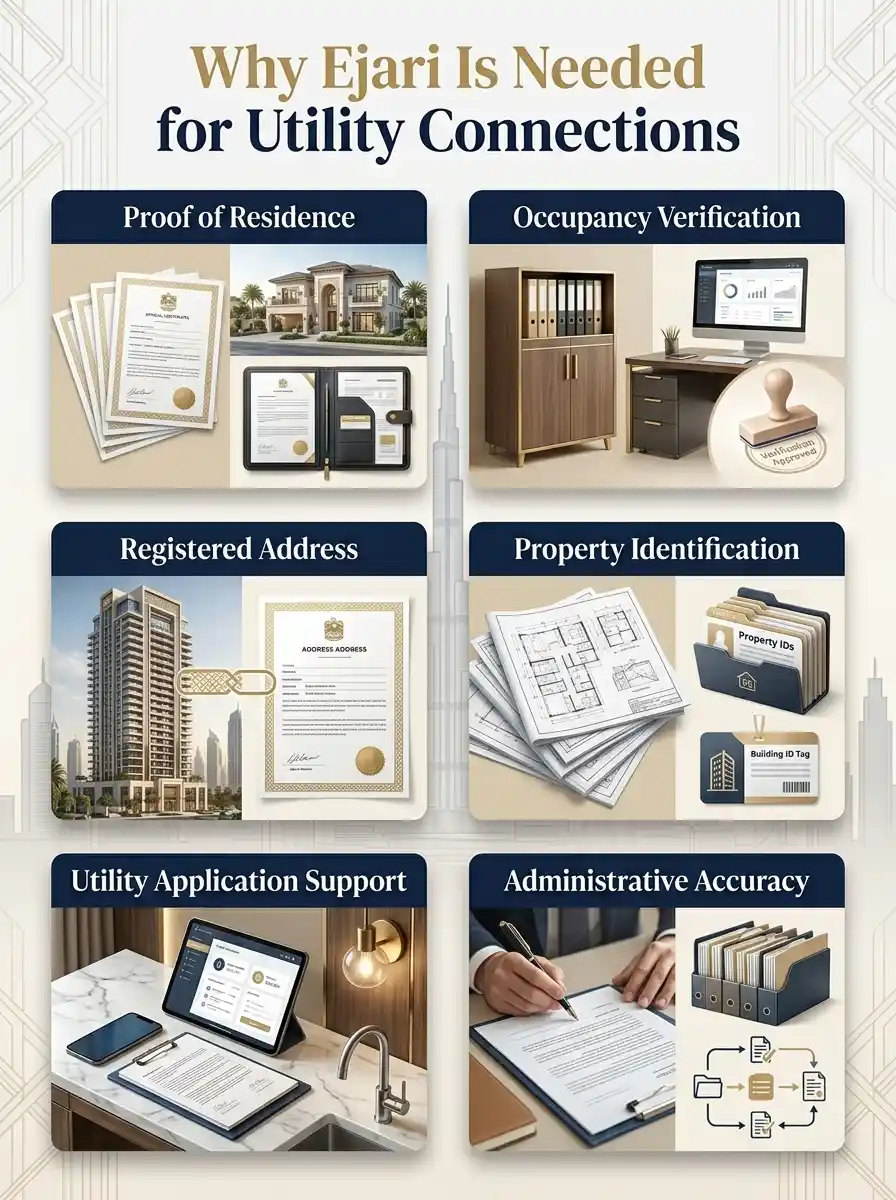
Ejari for water and electricity applications helps establish:
Proof of Residence
The certificate confirms the tenant’s registered address.
Occupancy Verification
It demonstrates that the applicant has a valid tenancy agreement.
Property Identification
The registered tenancy record helps verify the property associated with the application.
Administrative Accuracy
Accurate tenancy records help support efficient utility account setup.
These factors explain why tenancy registration is often a key step before utility activation.
Documents Commonly Required for Utility Connections
Requirements may vary depending on the property and application type, but applicants are often asked to prepare supporting documentation.
Commonly requested documents may include:
- Ejari certificate
- Emirates ID
- Passport copy
- Tenancy agreement
- Property-related information
- Contact details
Preparing all required documents in advance can help streamline the utility activation process.
Step-by-Step Guide to Connecting DEWA With Ejari
Many residents ask how to connect DEWA with Ejari after moving into a new property.
Although procedures may evolve over time, the process generally follows several key steps as depicted below.
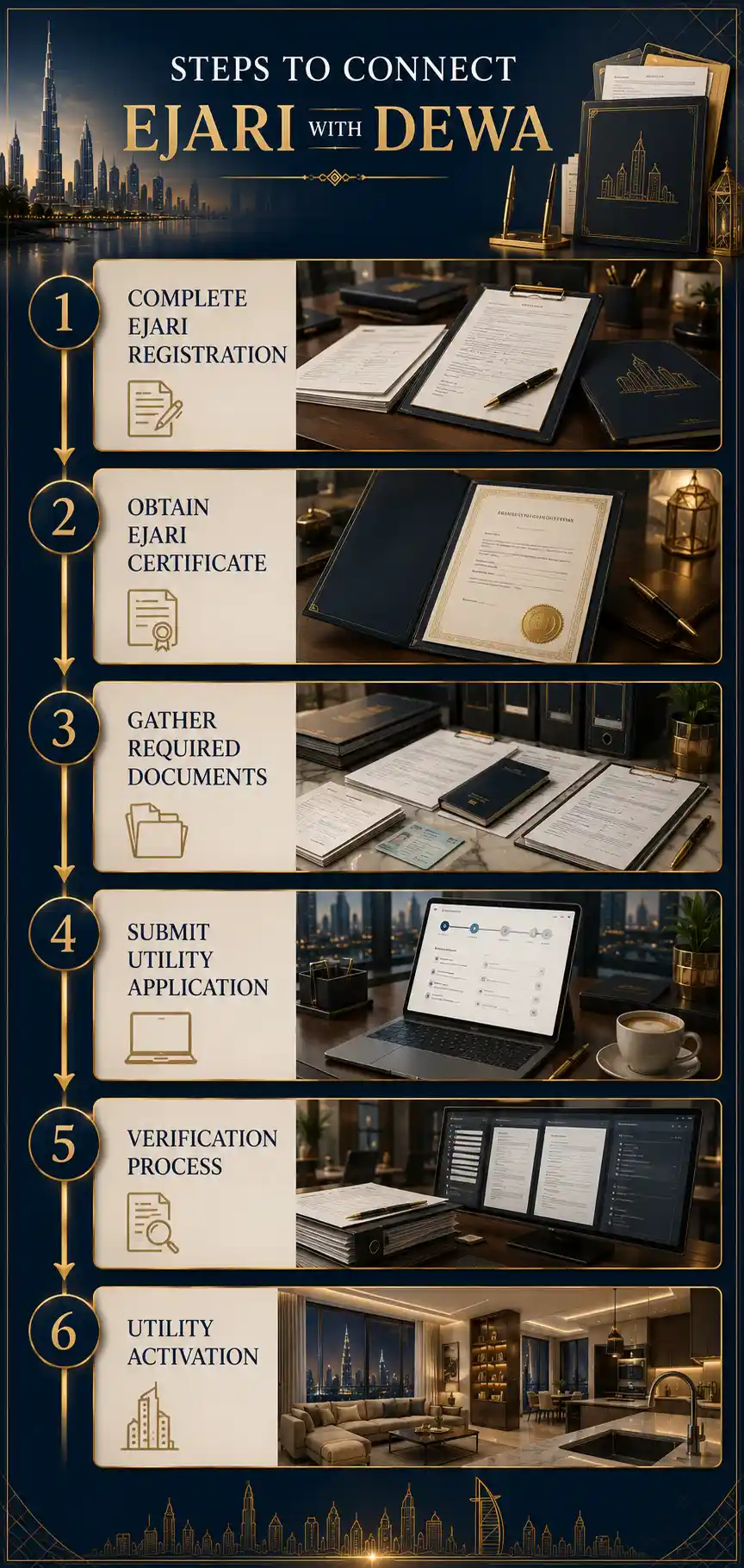
Step 1: Complete Ejari Registration
Before applying for utilities, ensure that your tenancy agreement has been properly registered.
Step 2: Obtain Your Ejari Certificate
After registration is completed, obtain the official certificate and verify that all information is accurate.
Step 3: Prepare Utility Application Documents
Gather the documentation required for utility account setup.
Step 4: Submit the Utility Application
Apply for utility services through approved channels.
Step 5: Verification Process
The submitted tenancy and applicant information is reviewed.
Step 6: Utility Activation
Once the application is processed, utility services can be activated for the property.
Completing each step carefully can ensure faster utility activation and fewer administrative delays.
First-Time Tenants Should Understand the Ejari Registration Process
If you are moving into a Dubai property for the first time, completing Ejari correctly is an important step before handling related services such as utility activation. Understanding the registration process, required documents, and information that needs to match your tenancy records can help prevent unnecessary delays. Our First-Time Tenant Guide to Ejari Registration provides a clear overview of what new tenants should know before registering their tenancy and moving on to other essential services.
How Long Does Utility Activation Take?
Processing times may vary depending on:
- Documentation accuracy
- Application volume
- Verification requirements
- Property details
- Administrative procedures
Providing complete and accurate information can help improve processing efficiency.
Applicants should ensure that tenancy registration has been finalized before starting utility-related applications.
Common Mistakes When Linking Ejari to DEWA
Several avoidable mistakes can slow down utility activation.
Incomplete Ejari Registration
Attempting to apply before tenancy registration is completed can create delays.
Incorrect Personal Information
Applicant details should match official records.
Mismatched Documentation
All submitted information should remain consistent across documents.
Delaying Applications
Waiting too long to initiate utility activation may affect move-in schedules.
Avoiding these mistakes helps support a smoother process.
Benefits of Completing Utility Registration Early
Many tenants choose to begin the utility application process shortly after obtaining their tenancy documentation.
Advantages include:
- Faster move-in preparation
- Reduced administrative stress
- Improved planning
- Earlier access to utilities
- Better overall relocation experience
Planning ahead can help tenants settle into their new property more efficiently.
Official Sources for Utility and Tenancy Information
Residents should always rely on official channels when handling tenancy registration and utility-related services.
For official tenancy registration guidance and property-related services, residents can refer to the Dubai Land Department (DLD), which oversees Dubai’s tenancy registration framework. For electricity and water service information, applications, and account management, residents should consult DEWA through its official service channels.
Using approved platforms helps ensure accurate information and secure processing.
Why Professional Assistance Can Help
Although the process is generally straightforward, some tenants prefer professional guidance to avoid delays and documentation errors.
Professional assistance can help with:
- Ejari registration
- Document preparation
- Utility application support
- Tenancy verification
- Administrative guidance
This support can be particularly useful for first-time tenants unfamiliar with Dubai’s tenancy and utility systems.
Conclusion
Understanding the process of linking Ejari to DEWA is an important part of moving into a property in Meydan or elsewhere in Dubai. Because utility providers typically require proof of occupancy and tenancy registration, obtaining a valid Ejari certificate is often one of the first steps toward activating electricity and water services.
By completing tenancy registration promptly, preparing the necessary documents, and using official service channels, tenants can reduce delays and enjoy a smoother relocation experience. If you need assistance with Ejari registration, tenancy documentation, or utility-related requirements, Ejari Meydan can help simplify the process and ensure your paperwork is ready when you need it.
FAQs
Why is linking Ejari to DEWA necessary?
Ejari helps verify tenancy information, occupancy status, and residential address details that may be required for utility activation.
Can I apply for DEWA without an Ejari certificate?
Utility application requirements may vary, but tenants are commonly required to provide tenancy-related documentation during the activation process.
How do I connect DEWA with Ejari?
The process generally involves completing tenancy registration, obtaining an Ejari certificate, preparing supporting documents, and submitting a utility application.
What documents are required for a DEWA utility connection?
Commonly requested documents may include an Ejari certificate, Emirates ID, passport copy, tenancy agreement, and property information.
How long does it take to activate utilities after Ejari registration?
Processing times vary depending on verification requirements, application volumes, and documentation accuracy.