

If you are renting a home in Meydan or anywhere else in Dubai, one of the most common questions every year is simple: how much can my landlord actually raise the rent? The good news is you do not have to guess. The RERA rent calculator gives you a clear, official answer based on how far your current rent sits below the market average. This guide explains exactly how the tool works, what the rules are for 2026, and what to check before you agree to any increase.
How Much Can My Landlord Legally Increase Rent in Meydan in 2026?
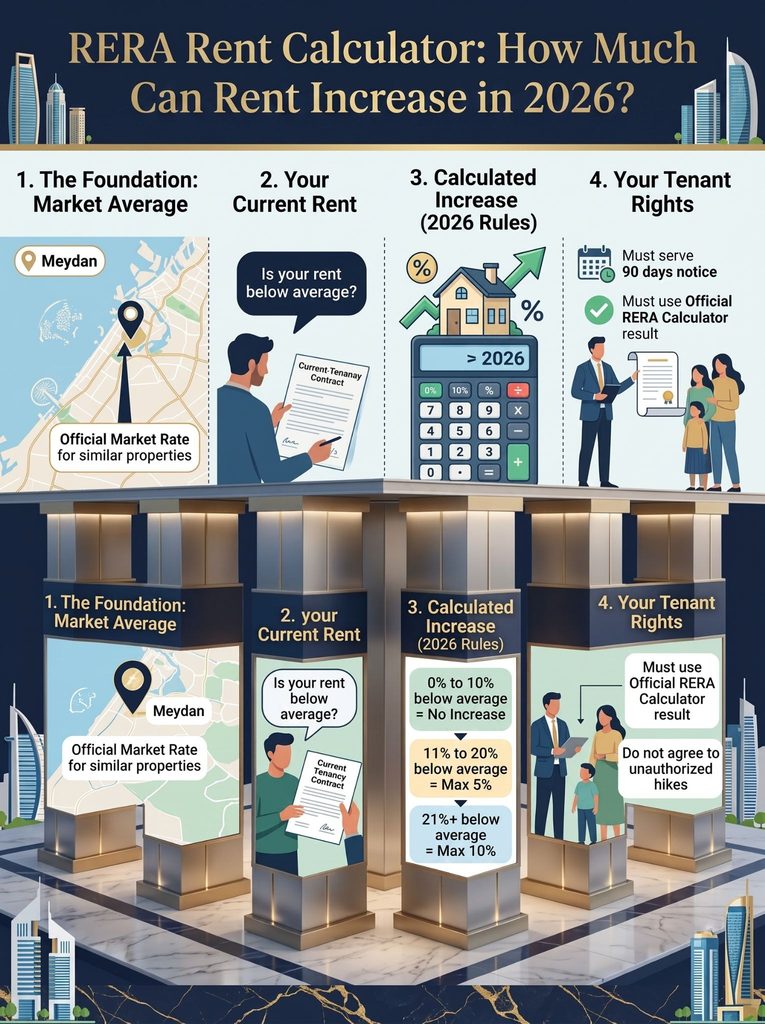
The amount a landlord can increase rent depends entirely on where your current rent stands compared to the average rent for similar properties in the same area. This is exactly what the RERA rent calculator is built to check.
Here is the general structure landlords in Dubai, including Meydan, must follow:
- If your rent is already in line with or above the market average, the landlord cannot increase it at all
- If your rent is 11% to 20% below the average, an increase of up to 5% is allowed
- If your rent is 21% to 30% below the average, an increase of up to 10% is allowed
- If your rent is 31% to 40% below the average, an increase of up to 15% is allowed
- If your rent is more than 40% below the average, an increase of up to 20% is allowed
These bands have stayed consistent for several years, and they continue to apply in 2026. The only thing that changes year to year is the average market rent figure itself, which is why checking the RERA rent calculator fresh each time is important rather than relying on last year’s numbers.
What Is the RERA Rent Calculator?
The RERA rent calculator is a free online tool run by the Dubai Land Department. It compares your current rent against the average rent for similar units in your building, community, or area. Based on that comparison, it tells you the maximum legal increase your landlord is allowed to apply.
To use it, you generally need:
- The area or community name (for example, Meydan One or District 11)
- The property type (apartment, villa, or townhouse)
- The number of bedrooms
- Your current annual rent amount
Once you enter these details, the calculator instantly shows whether an increase is allowed, and if so, the maximum percentage. It removes the guesswork and gives both tenants and landlords a fair, transparent reference point instead of relying on assumptions or negotiation pressure.
How Does the Rent Index Work?
The rent index is the underlying data set that powers the RERA rent calculator. It is essentially a large collection of actual rent transactions across Dubai, broken down by area, building type, and unit size.
Here is how it fits together:
- The Dubai Land Department collects real rental data from registered contracts
- This data is organized into average rent ranges for each area and property type
- When you use the calculator, your rent is measured against this average
- The result tells you exactly where your rent falls and what increase, if any, applies
Because the index is based on real market data, it updates periodically to reflect actual rent movements. This means a community like Meydan One, which has grown quickly, may show different average figures compared to a few years ago. That is part of why the RERA rent index 2026 figures matter so much for tenants trying to plan their renewal budget.
Can Landlords Increase Rent Above the Index?
No. Landlords in Dubai cannot legally increase rent beyond what the RERA rent calculator allows. This is one of the clearest Dubai rent increase rules, and it applies regardless of what is written in a private agreement between landlord and tenant.
A few important points to understand:
- Any clause in a tenancy contract that allows an increase higher than the legal limit is not enforceable
- If a landlord issues an increase notice above the allowed percentage, the tenant has the right to dispute it
- Disputes over unfair increases are typically handled by the Rental Dispute Centre, and Ejari records are used as evidence
- Tenants should always run the calculator themselves before agreeing to any renewal terms, rather than trusting a verbal estimate from the landlord or agent
Following the legal rent increase Dubai framework protects both sides. Landlords get a fair, standardized method to adjust rent, and tenants are protected from unexpected or excessive hikes.
What Is the Notice Period for a Rent Increase?
Even if an increase falls within the legal limit, a landlord cannot simply apply it without warning. Dubai law requires proper notice before any change to rent terms.
Key rules to remember:
- Landlords must give at least 90 days’ notice before the contract renewal date if they intend to increase rent
- This notice must be in writing, not just a verbal mention
- If no notice is given within this window, the increase generally cannot apply for that renewal cycle
- The notice period gives tenants enough time to check the calculator, negotiate, or plan a move if needed
This is also closely tied to Ejari rent increase matters, since the notice and the increase details are often referenced when the tenancy contract is renewed and re-registered with Ejari.
How Ejari Connects to Rent Increases
Many tenants do not realize how closely Ejari and rent increases are linked. Here is why it matters:
- Your Ejari certificate reflects your registered rent amount, so any legal increase needs to be updated during renewal
- If a dispute arises over an increase, Ejari records are used as proof of the original agreed rent
- An outdated or incorrect Ejari can create confusion during renewal negotiations
- Keeping Ejari accurate and up to date makes it much easier to confirm what a fair increase should look like
If you are renewing a lease and expecting a rent adjustment, it is worth confirming your Ejari details are correct before the new contract is finalized.
Quick Checklist Before Accepting a Rent Increase
- Run your numbers through the RERA rent calculator first
- Confirm you received proper written notice, at least 90 days in advance
- Check that the proposed increase matches the allowed percentage band
- Review your current Ejari certificate for accuracy
- Ask for clarification in writing if anything looks unclear before signing
Conclusion
Understanding how the RERA rent calculator works puts you in a much stronger position, whether you are a tenant trying to avoid an unfair increase or a landlord looking to apply a fair, legal adjustment. The rules are consistent, the notice period is clearly defined, and the calculator removes the guesswork entirely. Before you sign any renewal in Meydan or elsewhere in Dubai, take a few minutes to check the numbers yourself.
Need help checking your Ejari details before your next renewal? Reach out to Ejari Meydan service today to confirm your certificate is accurate and ready, so your next rent increase conversation is based on facts, not guesswork.
FAQs
Is the RERA rent calculator free to use?
Yes, it is a free tool provided by the Dubai Land Department and is available to any tenant or landlord in Dubai.
What happens if my landlord increases rent without proper notice?
The increase generally cannot be enforced for that renewal period, and tenants can raise the issue with the Rental Dispute Centre if needed.
Does the rent index apply differently to villas and apartments?
Yes, the calculator takes property type into account, so villas and apartments in the same area may show different average rent figures.
Can I dispute a rent increase that is within the legal limit?
If the increase follows the correct percentage and notice period, it is generally considered valid, though any specific concerns can still be raised with the relevant authority.
Do I need to update my Ejari after a rent increase?
Yes, once a new rent amount is agreed, the tenancy contract should be renewed and the Ejari record updated to reflect the correct figure.If you are renting a home in Meydan or anywhere else in Dubai, one of the most common questions every year is simple: how much can my landlord actually raise the rent? The good news is you do not have to guess. The RERA rent calculator gives you a clear, official answer based on how far your current rent sits below the market average. This guide explains exactly how the tool works, what the rules are for 2026, and what to check before you agree to any increase.
How Much Can My Landlord Legally Increase Rent in Meydan in 2026?
The amount a landlord can increase rent depends entirely on where your current rent stands compared to the average rent for similar properties in the same area. This is exactly what the RERA rent calculator is built to check.
Here is the general structure landlords in Dubai, including Meydan, must follow:
- If your rent is already in line with or above the market average, the landlord cannot increase it at all
- If your rent is 11% to 20% below the average, an increase of up to 5% is allowed
- If your rent is 21% to 30% below the average, an increase of up to 10% is allowed
- If your rent is 31% to 40% below the average, an increase of up to 15% is allowed
- If your rent is more than 40% below the average, an increase of up to 20% is allowed
These bands have stayed consistent for several years, and they continue to apply in 2026. The only thing that changes year to year is the average market rent figure itself, which is why checking the RERA rent calculator fresh each time is important rather than relying on last year’s numbers.
What Is the RERA Rent Calculator?
The RERA rent calculator is a free online tool run by the Dubai Land Department. It compares your current rent against the average rent for similar units in your building, community, or area. Based on that comparison, it tells you the maximum legal increase your landlord is allowed to apply.
To use it, you generally need:
- The area or community name (for example, Meydan One or District 11)
- The property type (apartment, villa, or townhouse)
- The number of bedrooms
- Your current annual rent amount
Once you enter these details, the calculator instantly shows whether an increase is allowed, and if so, the maximum percentage. It removes the guesswork and gives both tenants and landlords a fair, transparent reference point instead of relying on assumptions or negotiation pressure.
How Does the Rent Index Work?
The rent index is the underlying data set that powers the RERA rent calculator. It is essentially a large collection of actual rent transactions across Dubai, broken down by area, building type, and unit size.
Here is how it fits together:
- The Dubai Land Department collects real rental data from registered contracts
- This data is organized into average rent ranges for each area and property type
- When you use the calculator, your rent is measured against this average
- The result tells you exactly where your rent falls and what increase, if any, applies
Because the index is based on real market data, it updates periodically to reflect actual rent movements. This means a community like Meydan One, which has grown quickly, may show different average figures compared to a few years ago. That is part of why the RERA rent index 2026 figures matter so much for tenants trying to plan their renewal budget.
Can Landlords Increase Rent Above the Index?
No. Landlords in Dubai cannot legally increase rent beyond what the RERA rent calculator allows. This is one of the clearest Dubai rent increase rules, and it applies regardless of what is written in a private agreement between landlord and tenant.
A few important points to understand:
- Any clause in a tenancy contract that allows an increase higher than the legal limit is not enforceable
- If a landlord issues an increase notice above the allowed percentage, the tenant has the right to dispute it
- Disputes over unfair increases are typically handled by the Rental Dispute Centre, and Ejari records are used as evidence
- Tenants should always run the calculator themselves before agreeing to any renewal terms, rather than trusting a verbal estimate from the landlord or agent
Following the legal rent increase Dubai framework protects both sides. Landlords get a fair, standardized method to adjust rent, and tenants are protected from unexpected or excessive hikes.
What Is the Notice Period for a Rent Increase?
Even if an increase falls within the legal limit, a landlord cannot simply apply it without warning. Dubai law requires proper notice before any change to rent terms.
Key rules to remember:
- Landlords must give at least 90 days’ notice before the contract renewal date if they intend to increase rent
- This notice must be in writing, not just a verbal mention
- If no notice is given within this window, the increase generally cannot apply for that renewal cycle
- The notice period gives tenants enough time to check the calculator, negotiate, or plan a move if needed
This is also closely tied to Ejari rent increase matters, since the notice and the increase details are often referenced when the tenancy contract is renewed and re-registered with Ejari.
How Ejari Connects to Rent Increases
Many tenants do not realize how closely Ejari and rent increases are linked. Here is why it matters:
- Your Ejari certificate reflects your registered rent amount, so any legal increase needs to be updated during renewal
- If a dispute arises over an increase, Ejari records are used as proof of the original agreed rent
- An outdated or incorrect Ejari can create confusion during renewal negotiations
- Keeping Ejari accurate and up to date makes it much easier to confirm what a fair increase should look like
If you are renewing a lease and expecting a rent adjustment, it is worth confirming your Ejari details are correct before the new contract is finalized.
Quick Checklist Before Accepting a Rent Increase
- Run your numbers through the RERA rent calculator first
- Confirm you received proper written notice, at least 90 days in advance
- Check that the proposed increase matches the allowed percentage band
- Review your current Ejari certificate for accuracy
- Ask for clarification in writing if anything looks unclear before signing
Conclusion
Understanding how the RERA rent calculator works puts you in a much stronger position, whether you are a tenant trying to avoid an unfair increase or a landlord looking to apply a fair, legal adjustment. The rules are consistent, the notice period is clearly defined, and the calculator removes the guesswork entirely. Before you sign any renewal in Meydan or elsewhere in Dubai, take a few minutes to check the numbers yourself.
Need help checking your Ejari details before your next renewal? Reach out to Ejari Meydan service today to confirm your certificate is accurate and ready, so your next rent increase conversation is based on facts, not guesswork.
FAQs
Is the RERA rent calculator free to use?
Yes, it is a free tool provided by the Dubai Land Department and is available to any tenant or landlord in Dubai.
What happens if my landlord increases rent without proper notice?
The increase generally cannot be enforced for that renewal period, and tenants can raise the issue with the Rental Dispute Centre if needed.
Does the rent index apply differently to villas and apartments?
Yes, the calculator takes property type into account, so villas and apartments in the same area may show different average rent figures.
Can I dispute a rent increase that is within the legal limit?
If the increase follows the correct percentage and notice period, it is generally considered valid, though any specific concerns can still be raised with the relevant authority.
Do I need to update my Ejari after a rent increase?
Yes, once a new rent amount is agreed, the tenancy contract should be renewed and the Ejari record updated to reflect the correct figure.