
Running a portfolio of rental units in Dubai comes with a lot of moving parts, and tenancy registration is one of the tasks that simply cannot be skipped. For anyone overseeing several properties, Ejari property management becomes a daily part of the job rather than a one-time task.
This guide explains how firms handle Ejari property management across large portfolios, who is legally allowed to register on behalf of owners, and what paperwork keeps the process moving smoothly.
Can a Property Manager Register Ejari on Behalf of Owners?
Yes, this is one of the core functions of Ejari property management. RERA allows landlords, tenants, and authorized property management companies to submit Ejari applications. This means an owner does not need to personally visit a typing center or log into the portal every time a lease is signed or renewed. Instead, the management company can handle registration, renewal, and cancellation on the owner’s behalf, as long as they have the proper authorization documents in place.
This setup is one of the biggest reasons owners hire professional management in the first place. Handling Ejari property management internally, without outside help, would mean the owner personally manages every single tenancy filing, which becomes unmanageable once a portfolio grows past a handful of units.
Property Manager Ejari Dubai Responsibilities
A property manager Ejari Dubai role typically covers far more than simply pressing submit on an application. Responsibilities usually include:
- Collecting signed tenancy contracts from tenants before the lease start date
- Verifying Emirates ID and passport copies for accuracy
- Registering new tenancies and renewing expiring ones before they lapse
- Cancelling outgoing tenancies so a unit can be re-registered for the next tenant
- Keeping records organized so owners can review their portfolio status at any time
Because property manager Ejari Dubai tasks touch every unit under management, firms often assign a dedicated staff member or team purely to keep tenancy filings current across the portfolio.
How Do I Bulk Register a Portfolio?
Many people ask whether there is a single-click way to register dozens of units at once. In practice, bulk Ejari registration is not a single automated button, since each unit still requires its own tenancy contract, tenant details, and property-specific information submitted individually. What bulk Ejari registration really means in daily operations is processing many individual applications efficiently, one after another, through the same portal login or company account.
Property management companies streamline this by preparing document templates, keeping owner and property records saved in the system, and assigning staff to work through the queue systematically rather than treating each unit as a brand new case from scratch.
Ejari for Multiple Units in a Single Building
When a management company oversees several units within the same tower or community, Ejari for multiple units still requires separate registrations per unit, since Ejari certificates are tied to individual tenancy contracts rather than the building as a whole. However, having Ejari for multiple units within one project does make the process somewhat easier operationally, since the property details, building information, and often the landlord documents remain consistent across applications.
This is why many property managers organize their workflow by building or community, batching Ejari for multiple units together so the same supporting paperwork can be reused efficiently.
Is a POA Required?
This depends on how the management agreement is structured. In many cases, a POA Ejari registration setup is used so that the management company has clear legal authority to act for the owner. The Power of Attorney must be legalized and notarized, and it should specifically grant the appointed party the authority to handle tenancy and property-related matters, including registering, renewing, or cancelling Ejari certificates.
Without a proper POA Ejari registration arrangement in place, some registrations may require the owner to personally approve steps through the Dubai REST app, which can slow things down considerably for a busy portfolio.
What Documents Does a PM Company Need?
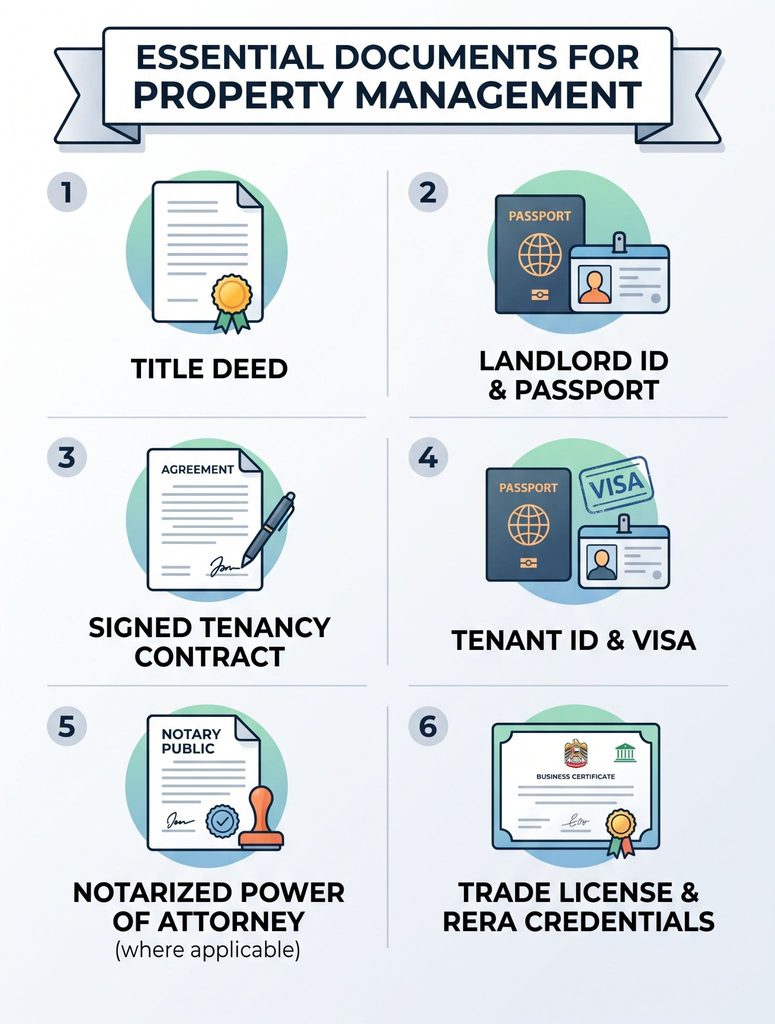
Before starting any Ejari property management workflow, it helps to have a checklist ready. Typical documents required include:
- Title deed for each property under management
- Landlord passport or Emirates ID copy
- Signed tenancy contract for each unit
- Tenant passport, visa page, and Emirates ID copy
- Notarized Power of Attorney, if the company is acting on the owner’s behalf
- Company trade license and relevant RERA broker or management credentials
Keeping these documents digitized and organized per unit saves significant time when renewal season arrives across a large portfolio.
Why Organized Ejari Property Management Matters
Falling behind on tenancy registration creates real operational problems. An expired Ejari certificate can block a tenant from renewing a visa, connecting DEWA, or filing a dispute if a disagreement arises. For a management company, that kind of oversight damages the relationship with both the owner and the tenant. Strong Ejari property management practices, built around clear document tracking and timely renewals, protect everyone involved and keep the portfolio running without unnecessary legal exposure.
Building a Reliable Workflow
Many successful property management teams treat Ejari property management as a recurring calendar task rather than a reactive one. Setting renewal reminders thirty to sixty days before expiry, maintaining a shared tracker across all units, and assigning clear ownership of the process within the team all help prevent last-minute scrambles. Firms that combine POA Ejari registration authority with a documented internal workflow tend to avoid the common bottlenecks that come from chasing signatures at the last moment.
Conclusion
Managing Ejari across a portfolio does not have to be overwhelming once the right systems are in place. Understanding who can register on behalf of owners, preparing documents in advance, and using a proper POA arrangement all make Ejari property management far more efficient at scale. Whether you are handling a handful of units or an entire building, a consistent process protects owners, tenants, and your own reputation as a management company.
If you are ready to simplify tenancy registration across your properties, reach out today to the team at Ejari Meydan to see how a structured Ejari process can save time and reduce risk across your entire portfolio.
Frequently Asked Questions
Can a property management company register Ejari without owner involvement every time?
Yes, once a valid authorization or POA is in place, the company can typically handle registrations, renewals, and cancellations without the owner personally logging in for each transaction.
Is there a faster way to handle Ejari for a large number of units at once?
There is no single automated bulk button, but organizing documents by building, keeping templates ready, and assigning dedicated staff significantly speeds up processing across many units.
What happens if a POA is not properly notarized?
An improperly notarized POA may be rejected during registration, so it is important to have the document legalized correctly before submitting any applications on an owner’s behalf.
Do all units in the same building need separate Ejari certificates?
Yes, each unit requires its own individual tenancy contract and Ejari certificate, even if several units are managed together within the same building or community.
What is the biggest risk of falling behind on Ejari renewals for a portfolio?
Expired certificates can block tenants from renewing visas or connecting utilities, and they can also prevent the management company from filing disputes if issues arise with a tenant.