

Dubai has become one of the most popular cities in the world for independent professionals, and many people wonder how tenancy registration fits into their residency plans. If you are applying for Ejari for freelance visa purposes, understanding the connection between your rental address and your visa application can save you a lot of confusion.
This guide walks through exactly when Ejari for freelance visa registration is needed, how remote workers fit into the picture, and what documents you should prepare in advance.
Is Ejari Required for a Freelance Visa?
In most cases, yes. Once you have your freelance permit from a free zone authority such as TECOM, Dubai Media City, or IFZA, the next step toward a residence visa is proving where you live. Meeting this part of the process is what people mean when they refer to Ejari for freelance visa requirements, since immigration authorities generally expect a registered tenancy contract as part of the residency file. Without it, your visa stamping or Emirates ID application can be delayed or rejected.
It is worth noting that the freelance permit itself, which allows you to legally invoice clients and operate as a freelancer, is separate from the residency visa. The permit comes first, then the tenancy and Ejari step supports the residency portion of the process.
Freelancer Ejari Dubai Basics You Should Know
For anyone new to the process, freelancer Ejari Dubai registration works the same way as it does for any other tenant. You sign a tenancy contract with a landlord, then register that contract through the Dubai REST app, an authorized typing center, or a trustee office. The resulting Ejari certificate becomes your proof of a legal residential address in Dubai.
Many freelancers assume their business license address automatically counts as their residential address, but that is not the case. Your business Ejari, if you have a virtual office, is separate from your home Ejari, and freelancer Ejari Dubai applicants may need both depending on their visa type and how their free zone structures its requirements.
Can I Use a Co-Working Address for Ejari?
This is one of the most frequent questions among independent professionals. The answer depends on what the Ejari is being used for. If you are registering Ejari for your trade license or visa sponsorship through your company, a virtual office or co-working package that includes a properly registered tenancy contract can work, since the Dubai Land Department accepts these arrangements when the lease is in the correct format.
However, if your visa requires proof of a residential address rather than a business address, a co-working space typically cannot substitute for an actual home tenancy. It is best to check with your free zone authority to confirm which type of Ejari applies to your specific application.
How Does Ejari Support Freelance or Remote Work Visa Applications?
Ejari plays a supporting but essential role in the overall visa journey. Once your freelance permit is issued, the Dubai visa Ejari requirement typically comes into play during the residency stamping stage. Immigration authorities use the Ejari certificate to confirm that you have a genuine, legally registered place to live in the emirate.
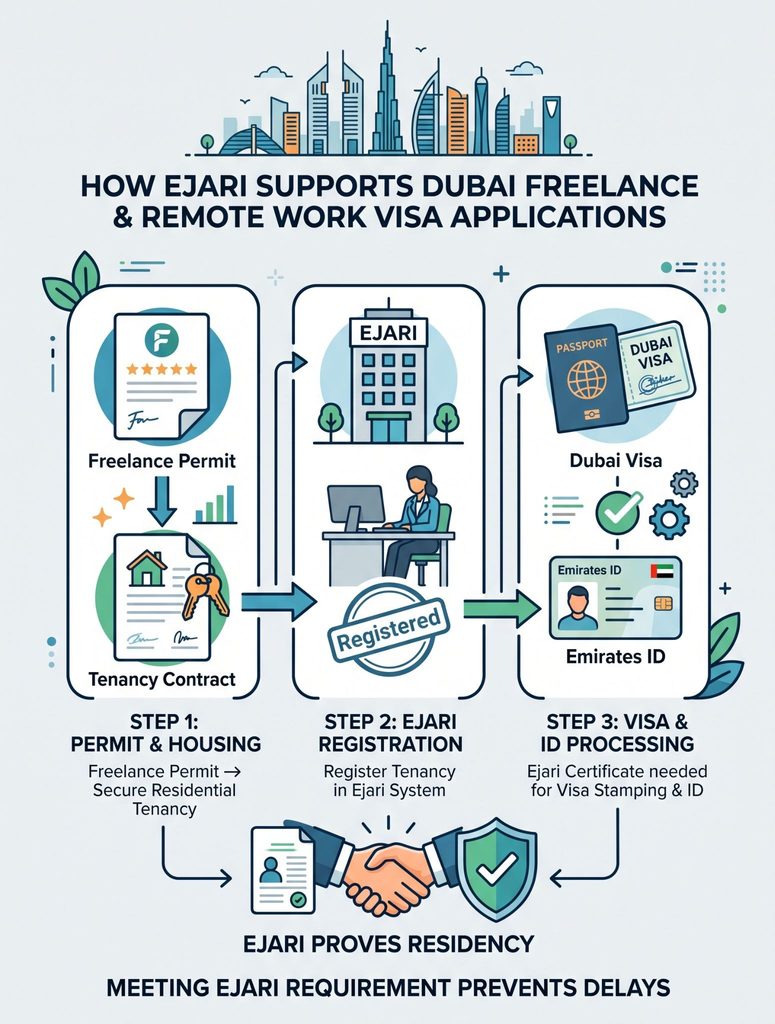
Here is roughly how the process fits together:
- Obtain your freelance permit from an approved free zone authority
- Secure a residential tenancy contract or use a package that includes one
- Register the tenancy through Ejari to receive your certificate
- Submit the Ejari certificate along with your other documents for visa stamping and Emirates ID processing
Meeting the Dubai visa Ejari requirement early in the process helps avoid last minute delays once your visa application is already underway.
Remote Worker Ejari Considerations
Remote workers who are not necessarily freelancing under a UAE license, but are instead working for an overseas employer while living in Dubai, often go through a different visa category. Even so, remote worker Ejari registration tends to follow similar logic. If your visa type requires a UAE residential address for stamping or Emirates ID purposes, you will likely still need a valid tenancy contract registered through Ejari.
Some remote worker visa programs are more flexible about accommodation proof in the early stages, but once you plan to stay longer term, remote worker Ejari registration on a proper lease is usually expected.
Virtual Working Visa Ejari Requirements
The virtual working visa Ejari process is designed for people who want to live in Dubai while working remotely for a company based outside the UAE. While the initial application for this visa category may accept a hotel booking or short term accommodation proof, most applicants eventually move into a long term rental and complete registration once they settle in.
Keeping your virtual working visa Ejari documentation up to date matters if you plan to renew your visa, sponsor family members, or open a local bank account, since all of these steps commonly ask for a valid Ejari certificate.
What Documents Do Freelancers Need?
Preparing your paperwork in advance makes the entire process smoother. Typical documents needed for Ejari for freelance visa registration include:
- Valid passport copy with visa page, once issued
- Freelance permit or trade license from your free zone authority
- Signed tenancy contract with the landlord
- Emirates ID copy, if already issued
- Landlord documents such as title deed and passport or Emirates ID copy
- Proof of payment for the rental, such as cheques or transfer receipts
Having these ready before your Ejari appointment helps you avoid multiple trips to a typing center or trustee office.
Conclusion
Freelancers and remote workers in Dubai do generally need Ejari at some stage of their visa journey, even though the exact timing depends on the specific visa category and free zone rules. Ejari for freelance visa registration is not just a formality; it is the document trail that immigration authorities, banks, and service providers rely on.
If you are ready to complete your tenancy registration, call the team at Ejari Meydan to process your Ejari for freelance visa paperwork quickly and correctly, so your application moves forward without unnecessary delays.
Frequently Asked Questions
Do all freelancers in Dubai need Ejari for their visa?
Most freelancers need Ejari for freelance visa purposes once they reach the residency stamping stage, since a registered tenancy is generally required as proof of address.
Can I use my business address instead of a home address for Ejari?
It depends on the requirement. A business Ejari through a virtual office may satisfy trade license or company visa needs, but a residential visa may require a separate home tenancy registration.
Is Ejari required if I already have a freelance permit?
Yes, the freelance permit and Ejari for freelance visa registration serve different purposes. The permit allows you to work, while Ejari confirms your registered address for residency steps.
What if I only have a short-term accommodation while applying for my visa?
Some virtual working visa Ejari applications accept temporary proof at first, but you will likely need to register a proper tenancy once you settle into a long-term rental.
How long does Ejari registration take for freelancers?
If your documents are complete, Ejari registration can often be completed the same day through a typing center, or within one to two business days when applying online.