
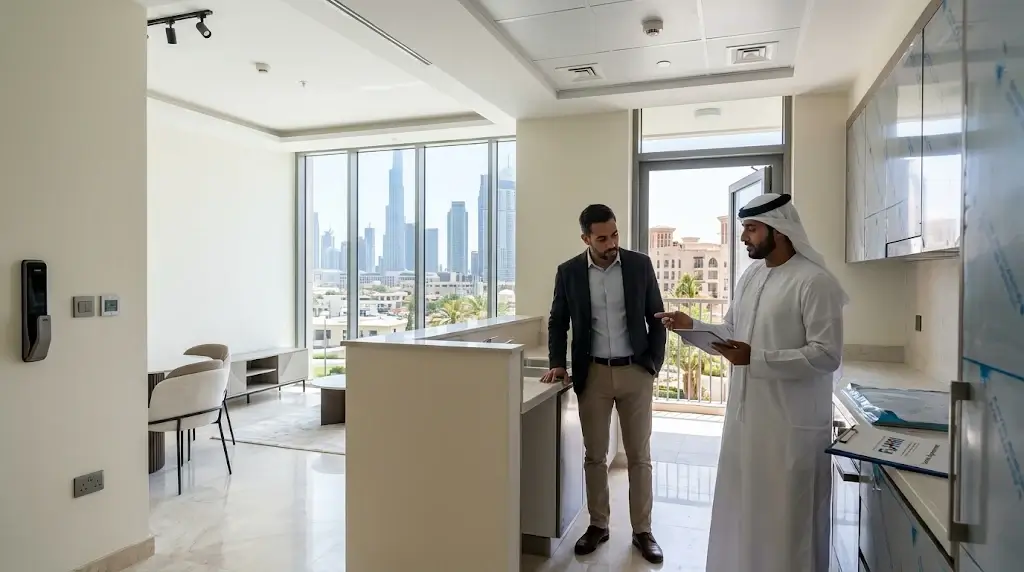
Many landlords want to rent out a unit that is still being finished, repainted, or partly furnished, and many tenants find great deals on properties that are not completely ready. That raises a common question: can the lease be registered while work is still going on? Understanding Ejari renovated property Dubai rules helps both sides avoid disputes, rejected registrations, and surprise costs. Strong rental property compliance Dubai practices start with clear checks before anyone signs. This guide explains what to review, which clauses to include, and who is responsible for permissions.
What Should Tenants and Landlords Check Before Registering a Tenancy for a Property Undergoing Renovation?
Registration records the tenancy, not the quality of the finishes. In most cases, the system needs the unit to exist correctly in the property records and the contract to be properly signed. Even so, a property that is partly renovated can create practical problems. Before you register, both sides should confirm the following:
- The unit appears correctly in the system and matches the title deed.
- The landlord is the registered owner or an authorised representative.
- The tenancy contract states the true condition of the property at handover.
- The start date reflects when the tenant can realistically move in.
- Any unfinished work is described in writing, with an agreed completion date.
- Utilities can be activated, so water and electricity will be available.
Ejari renovated property Dubai registrations go much more smoothly when the contract describes the work clearly. If the unit is heavily under construction or unsafe, think carefully before registering, because a tenancy usually assumes a property that can be used for its intended purpose.
Does the Property Condition Affect Ejari Registration?
Registration itself focuses on the parties, the property details, the rent, and the lease period. It does not normally inspect the interior finish. However, Ejari property condition still matters in several ways:
- Dubai tenancy law generally expects the landlord to hand over a property that is suitable for its intended use.
- Utility activation may be delayed if the unit is not ready or the meters are not installed.
- A property with serious defects can lead to a dispute over rent, deposit, or early termination.
- Insurance, building rules, and safety requirements may apply to units that are still under works.
If you are a tenant, record the condition at handover with dated photos and a written checklist. If you are a landlord, document the work done and the date it was completed. A clear record of Ejari property condition protects both parties if a disagreement arises later.
Should Renovation Clauses Appear in the Tenancy Contract?
Yes. If work is ongoing or planned, put it in writing. A well-drafted renovation tenancy agreement Dubai parties sign should address matters such as:
- A description of the work still to be done and the expected completion date.
- Whether rent starts on the lease date or after the work is finished.
- Access arrangements for contractors and inspections.
- What happens if the work is delayed, such as a rent reduction or a later start date.
- Who pays for repairs, materials, and any damage caused by the works.
- Whether the tenant may make changes, and under what conditions.
Verbal promises are easy to forget and hard to prove. Written clauses reduce the chance of conflict, and they give you a clear basis if you later need to rely on your records. Ejari renovated property Dubai contracts with specific clauses are far easier to defend than vague ones.
Who Is Responsible for Obtaining Renovation Permissions?
Responsibility depends on the type of work and on who is making the changes. As a general guide:
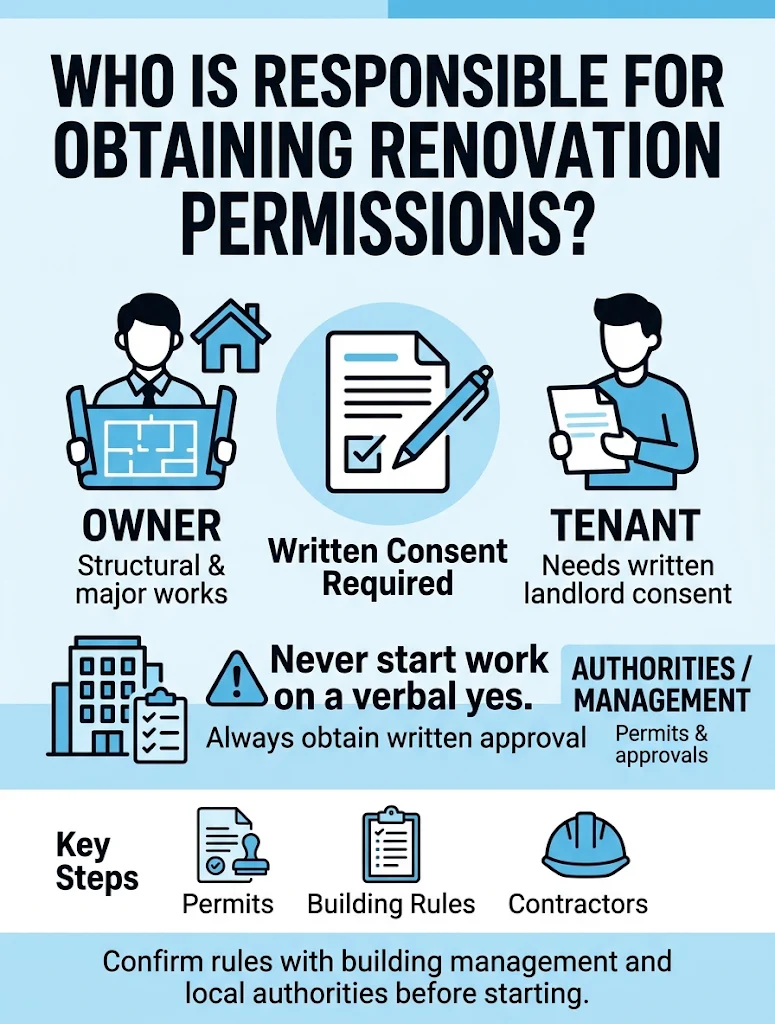
- The owner is usually responsible for permissions for structural changes or major works.
- A tenant who wants to alter the property normally needs the landlord’s written consent first.
- Building management, the developer, or the owners association may also need to approve certain works.
- Some works need permits from the relevant authority, especially where walls, plumbing, air conditioning, or the facade are involved.
A tenant should never begin modifications on the strength of a verbal yes. Obtain landlord renovation approval in writing, and ask for copies of any permits before work begins. Landlords should also check the building rules, because contractors may need access cards, insurance, or approved working hours. Requirements can change, so confirm the current rules with the building management and the relevant authorities.
What About Partially Furnished Properties?
A unit can be rented unfurnished, partially furnished, or fully furnished, and registration works the same way in each case. The key is to list what is included. Add an inventory to the contract that names the furniture and appliances, notes their condition, and states who is responsible for repairs or replacement. Photographs attached to the inventory make future disagreements much easier to settle. If items are removed or added during the lease, update the inventory in writing.
Step-by-Step Checklist Before Registering
- Confirm that the unit and building appear correctly in the property records.
- Inspect the property together and record its condition with photos and notes.
- List unfinished work, completion dates, and who is responsible for each task.
- Agree on rent timing and any reduction if work is delayed.
- Add renovation, access, and repair clauses to the tenancy contract.
- Confirm any permissions or approvals needed for planned works.
- Register the contract and keep the certificate with all supporting records.
Following this order keeps rental property compliance with Dubai authorities expect in view and reduces last-minute problems.
Common Mistakes to Avoid
- Registering the lease without describing unfinished work.
- Letting the tenant move in before utilities are ready.
- Starting alterations without written permission.
- Failing to record the condition at handover.
- Assuming the renovation permit is the tenant’s responsibility.
- Leaving out an inventory for a partially furnished unit.
- Paying fees before confirming that the unit appears in the system.
Conclusion
A property that is partly furnished or still being renovated can usually be rented, but only when both sides are clear about the condition, the timeline, and the responsibilities. Check the records, put the work in writing, and secure permissions before any changes begin. With the right preparation, Ejari renovated property Dubai registration becomes straightforward, and a clear renovation tenancy agreement Dubai landlords and tenants can both rely on protects everyone.
Not sure how to describe the work in your contract or whether your unit is ready to register? The team at Ejari Meydan is ready to help. We will review your situation, explain what applies, and guide you through the registration. Contact the team at Ejari Meydan today and move forward with confidence. This article is general information and not legal advice.
Frequently Asked Questions
Can I register a lease while renovation is still in progress?
Often yes, as long as the unit exists in the records and the contract is properly signed. Describe the unfinished work clearly in the agreement.
Can a tenant renovate without asking the landlord?
No. Alterations normally require written consent. Obtain landlord renovation approval before any work begins, and keep a copy.
Who pays for renovation work?
It depends on the contract and the type of work. Major works are usually the landlord’s responsibility, but the agreement should state it clearly.
Does a partially furnished unit need a special registration?
No. It is registered like any other lease, but you should attach an inventory of the furniture and appliances.
What if utilities cannot be activated because the work is unfinished?
Delay the start date or agree to a reduction in writing. Utility activation usually depends on a registered contract and a ready property.