

Sharing a rental property has become increasingly common in Dubai, especially among professionals, friends, and family members looking to reduce housing costs. If multiple people are renting the same property, understanding how Ejari for joint tenancy works is essential. Many tenants are unsure whether all occupants can be listed on the tenancy agreement, how co-tenants are registered, and whether shared accommodation can have multiple names on an Ejari certificate.
The good news is that Dubai’s tenancy system allows for joint tenancy arrangements under specific circumstances. Whether you are sharing a villa, apartment, or townhouse in Meydan, understanding the registration process can help ensure compliance with tenancy regulations and avoid future complications.
What Is Joint Tenancy in Dubai?
Joint tenancy refers to a rental arrangement where two or more individuals share legal responsibility for a leased property. Instead of having a single tenant listed on the tenancy agreement, multiple occupants may be recognized as co-tenants.
In a joint tenancy arrangement:
- Multiple individuals share the property.
- Tenants may share rental obligations.
- Rights and responsibilities are defined in the lease agreement.
- Occupants can enjoy legal recognition under the tenancy contract.
- Landlords are aware of all registered tenants.
This setup is common among roommates, families, business partners, and groups of professionals renting larger properties.
Understanding Ejari for Joint Tenancy
Ejari for joint tenancy allows multiple individuals to be connected to a single tenancy agreement when approved by the landlord and documented correctly.
Since Ejari is regulated under Dubai’s real estate framework, tenants should ensure that their lease information is accurate and compliant with the latest requirements published by the Dubai Land Department (DLD). Proper registration helps support tenancy-related applications and other residential services in Dubai.
The purpose of registration is to:
- Create an official tenancy record.
- Protect tenant rights.
- Ensure transparency between landlords and tenants.
- Support utility and government service applications.
- Reduce disputes regarding occupancy.
When multiple tenants are included in the contract, the registration process must accurately reflect the agreed tenancy arrangement.
Can Multiple Names Be Added to Ejari?
One of the most common questions regarding Ejari multiple names is whether more than one tenant can appear on a tenancy registration.
The answer depends on the tenancy contract itself.
If the lease agreement identifies multiple tenants and the landlord approves the arrangement, those details can generally be reflected during registration. The tenancy contract remains the primary document used for Ejari processing.
Before registration, tenants should confirm:
- Whether the landlord permits multiple tenants.
- How tenant names will appear on the contract.
- Whether all co-tenants must provide identification documents.
- Any building-specific occupancy requirements.
Ensuring accurate documentation at the beginning can prevent future registration issues.
Who Typically Uses Joint Tenancy Arrangements?
Joint tenancy is commonly used by different groups of tenants in Meydan who share accommodation legally.

Friends Sharing Accommodation
Many professionals choose to rent apartments together to reduce individual housing costs while enjoying access to premium communities.
Family Members
Siblings, parents, and adult children may share a lease agreement and jointly occupy a property.
Business Partners
Entrepreneurs relocating to Dubai may temporarily share residential accommodation while establishing operations.
Long-Term Roommates
Individuals who plan to stay together for an extended period often prefer formal tenancy recognition rather than informal occupancy arrangements.
These situations commonly require Ejari co-tenant registration to ensure all parties are properly documented.
Documents Required for Joint Tenancy Registration
The exact requirements may vary depending on the property and tenancy structure, but common documentation includes:
- Signed tenancy contract
- Emirates ID copies of tenants
- Passport copies when applicable
- Residence visa copies
- Property details
- Landlord documentation
- Supporting occupancy information if requested
All information submitted during registration should match the tenancy contract to avoid processing delays.
How the Ejari Registration Process Works for Multiple Tenants
The registration process for joint tenancy generally follows the same structure as standard Ejari registration.
Step 1: Prepare the Lease Agreement
The landlord and tenants agree on the tenancy terms and include all relevant tenant information in the contract.
Step 2: Gather Required Documents
Each tenant should prepare the necessary identification and supporting documents.
Step 3: Submit Registration Application
The tenancy agreement and supporting documents are submitted through the approved registration channels.
Step 4: Verification Process
The details are reviewed to ensure consistency between the lease agreement and registration application.
Step 5: Receive Ejari Certificate
Once approved, the tenancy registration is completed and the Ejari certificate is issued.
The following infographic summarizes how shared-tenancy registration is typically completed.
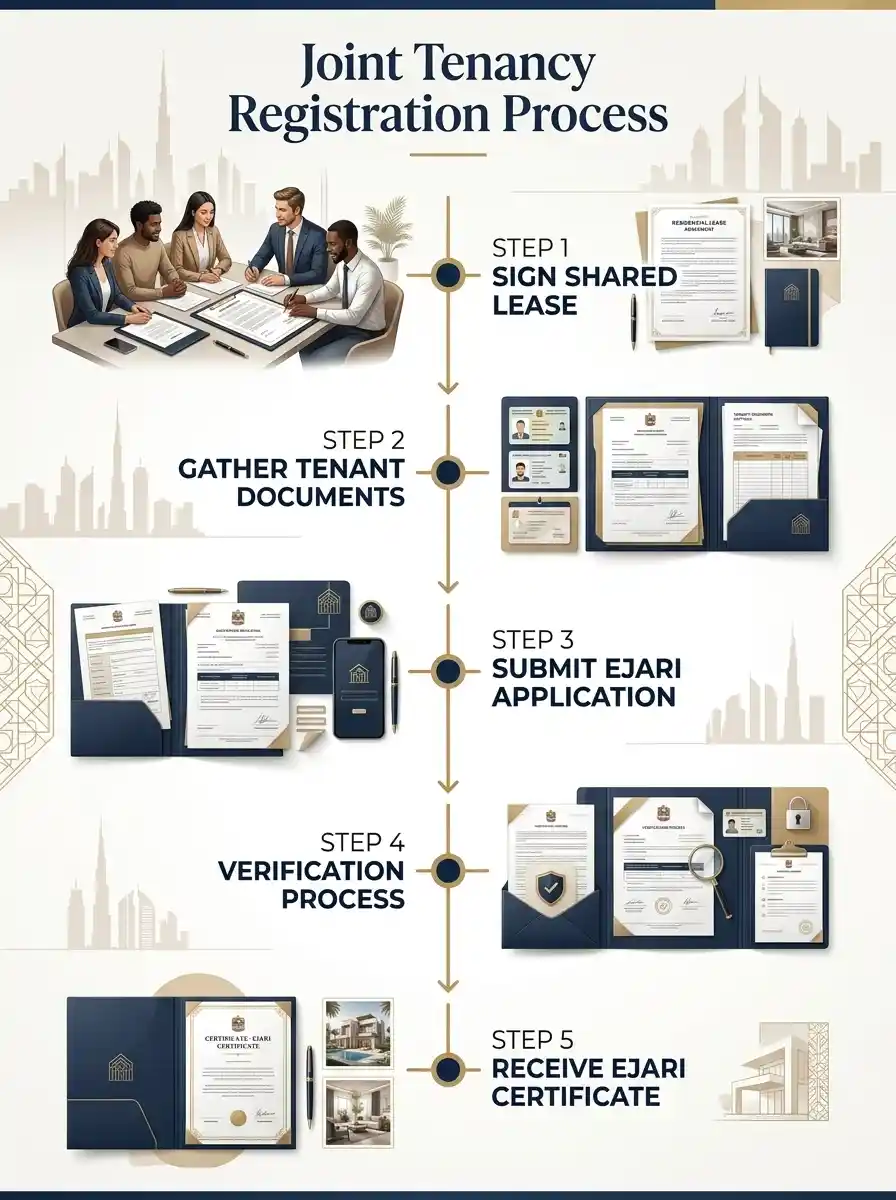
Understanding these steps can simplify the process of obtaining Ejari for joint tenancy without unnecessary delays.
Benefits of Registering All Tenants Properly
Many shared accommodation arrangements begin informally, but proper registration offers several advantages.
Legal Clarity
Clearly documented tenancy information reduces confusion regarding occupancy rights and responsibilities.
Better Record Keeping
Official registration creates a transparent record recognized by relevant authorities.
Reduced Disputes
When tenant information is formally documented, misunderstandings regarding occupancy can often be minimized.
Easier Administrative Processes
Accurate tenancy records can support applications that require proof of residence.
Greater Transparency
Both landlords and tenants benefit from a clearly defined rental arrangement.
These advantages make proper Ejari co-tenant registration an important consideration for shared housing.
Common Challenges with Shared Leases
While joint tenancy offers flexibility, tenants should remain aware of potential challenges.
Changes in Occupancy
Roommates may move out before the lease ends, creating the need for tenancy updates.
Responsibility for Rent
All parties should clearly understand their financial obligations under the agreement.
Contract Amendments
Changes to tenant information may require updated documentation.
Communication with the Landlord
Maintaining clear communication helps ensure that tenancy records remain accurate throughout the lease period.
Proper planning can significantly reduce these issues.
Ejari Roommates: Important Considerations
When discussing Ejari roommates arrangements, tenants should remember that not all shared housing situations are identical.
Before signing a lease:
- Confirm occupancy limits.
- Understand community regulations.
- Clarify utility responsibilities.
- Review tenancy obligations carefully.
- Ensure all approved occupants are disclosed.
These steps help create a smoother rental experience for everyone involved.
What Happens If a Co-Tenant Moves Out?
A common concern in joint tenancy arrangements is what happens when one tenant decides to leave before the lease expires.
The appropriate solution depends on:
- Lease terms
- Landlord approval
- Replacement tenant arrangements
- Existing contractual obligations
In many cases, updates may be required to ensure tenancy records remain accurate. Tenants should communicate with the landlord promptly whenever occupancy changes occur.
Why Joint Tenancy Is Growing in Meydan
Meydan has become a popular residential destination due to its modern communities, accessibility, and premium lifestyle offerings.
Many residents choose shared accommodation because it provides:
- Greater affordability
- Access to larger properties
- Flexible living arrangements
- Convenient community amenities
- A collaborative living environment
As shared housing continues to grow, understanding Ejari for joint tenancy becomes increasingly important for tenants seeking legal and administrative clarity.
Conclusion
Understanding Ejari for joint tenancy is essential for anyone sharing a rental property in Meydan. Whether you are renting with family members, friends, or long-term roommates, proper registration helps ensure that tenancy records accurately reflect the occupancy arrangement.
By preparing the correct documentation, confirming landlord approval, and following the registration process carefully, tenants can avoid complications and maintain compliance with Dubai’s tenancy requirements. If you need assistance with Ejari co-tenant registration, shared lease processing, or tenancy documentation, Ejari Meydan can help guide you through the process efficiently.
FAQs
Can more than one tenant be listed on Ejari?
Yes, if multiple tenants are included in the tenancy contract and the arrangement is approved by the landlord.
Is joint tenancy legal in Dubai?
Yes, joint tenancy arrangements are permitted when documented properly and comply with tenancy regulations.
What documents are needed for Ejari co-tenant registration?
Commonly required documents include the tenancy contract, Emirates IDs, passport copies, visa copies, and property-related documents.
Can roommates be included in Ejari registration?
Roommates may be included if the tenancy agreement and landlord approval support the arrangement.
What happens if one tenant leaves before the lease expires?
The solution depends on the lease terms and landlord approval. Updates to tenancy records may be required.