

If you are renting, buying, or investing in property in Dubai, understanding the difference between Ejari vs Oqood is essential. Both documents are related to real estate transactions, but they serve completely different purposes. Many residents, investors, and first-time property buyers often confuse these documents because both are issued through government-regulated systems and relate to property ownership or tenancy.
The key difference is that Ejari is a tenancy registration system for leased properties, while Oqood is a registration document used for off-plan property purchases. Knowing when each document applies can help you avoid delays in utility activation, visa applications, property transfers, and other legal processes in Dubai.
What Is Ejari?
Ejari is a tenancy registration system introduced by the Dubai Land Department (DLD) through the Real Estate Regulatory Agency (RERA). The word “Ejari” means “my rent” in Arabic.
The system records rental agreements between landlords and tenants, creating an official record recognized by government authorities. Once a tenancy contract is registered, the tenant receives an Ejari certificate that serves as proof of a legally registered lease.
The Ejari certificate is commonly required for:
- DEWA connection applications
- Residence visa processing
- Family sponsorship
- Internet and telecom services
- Business licensing requirements
- Tenancy dispute resolution
Without a valid Ejari registration, many essential services in Dubai cannot be activated.
What Is Oqood?
Oqood is a property registration system used for off-plan real estate transactions in Dubai. It records ownership rights of buyers who purchase properties directly from developers before project completion.
When a buyer purchases an off-plan apartment, villa, or townhouse, the transaction is registered through the Oqood system. The buyer receives an Oqood certificate confirming their ownership rights during the construction phase.
Oqood helps:
- Protect investor rights
- Register off-plan sales officially
- Track ownership records
- Facilitate future property transfers
- Ensure regulatory compliance
Once the project is completed, the Oqood registration is replaced by a Title Deed issued by the Dubai Land Department.
Ejari vs Oqood: Key Differences
Many people searching for the Ejari and Oqood difference want a simple comparison. The following comparison highlights the major differences between Ejari and Oqood in Dubai.
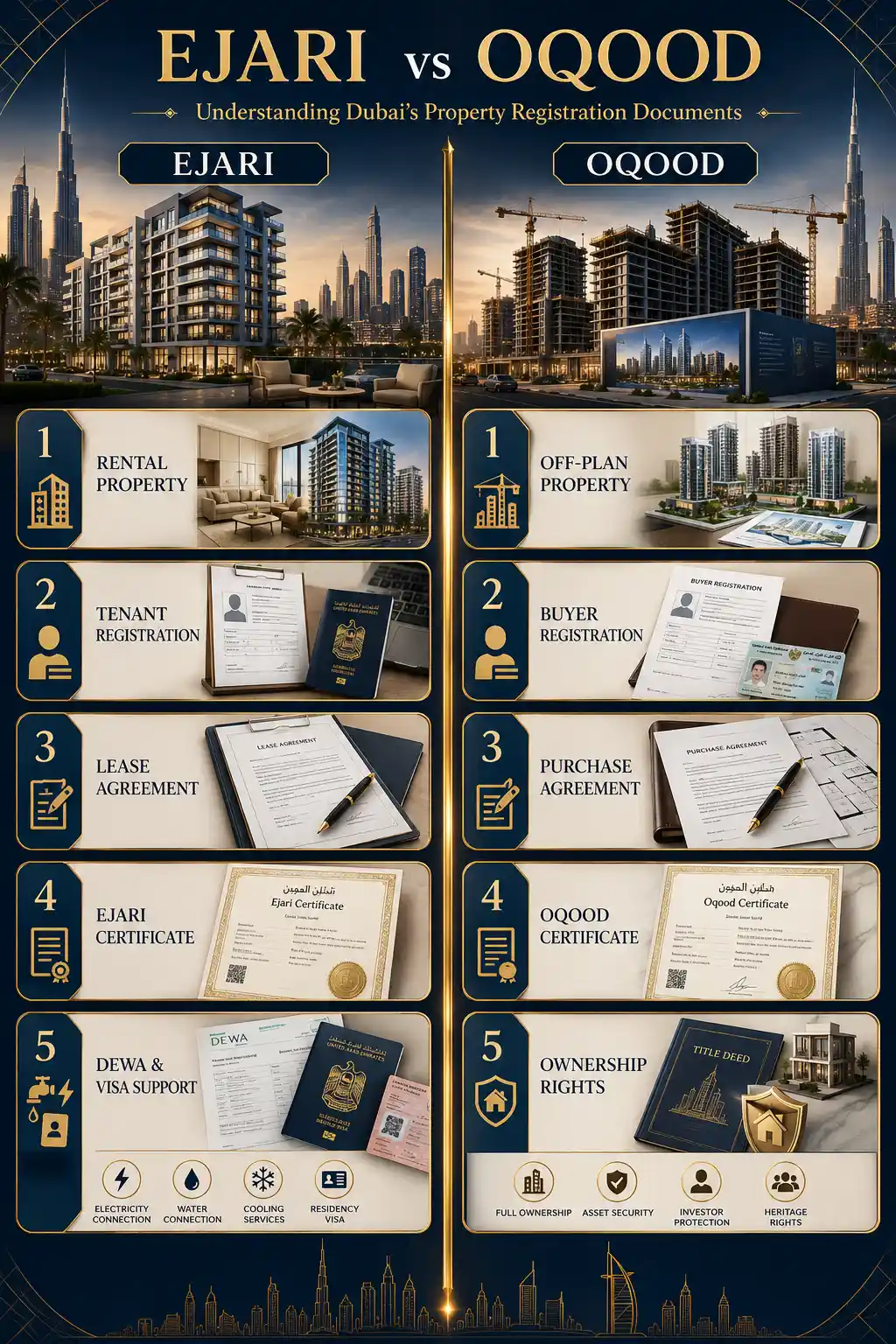
The table below highlights the main distinctions.
Ejari Certificate vs Oqood
| Feature | Ejari | Oqood |
|---|---|---|
| Purpose | Tenancy registration | Off-plan ownership registration |
| Issuing Authority | Dubai Land Department / RERA | Dubai Land Department |
| Applies To | Rental properties | Off-plan properties |
| Issued To | Tenants | Property buyers |
| Main Function | Records lease agreements | Records ownership rights |
| Required For | DEWA, visas, services | Ownership verification |
| Validity | Lease period | Until project completion |
| Final Document | Ejari Certificate | Title Deed after completion |
This comparison makes the distinction between Ejari vs Oqood much easier to understand.
How Does the Ejari Registration Process Work?
The Ejari registration process is straightforward and usually completed after signing a tenancy agreement.
The typical process includes:
- Sign the tenancy contract.
- Gather required documents.
- Submit the application online or through an approved center.
- Pay applicable registration fees.
- Receive the Ejari certificate.
Documents usually required include:
- Emirates ID
- Passport copy
- Signed tenancy contract
- Landlord details
- Property title information
Once approved, the tenant receives the official registration certificate.
How Does Oqood Registration Work?
The Oqood registration process generally begins after signing an off-plan sales agreement with a developer.
The process usually involves:
- Selecting an off-plan property.
- Signing the sales and purchase agreement.
- Paying the required registration fees.
- The developer submits ownership details.
- The buyer receives Oqood registration.
The Oqood certificate remains active throughout the construction phase and serves as evidence of ownership rights until the property is completed.
Is Ejari Required for Freehold Properties?
One common question regarding Ejari for freehold properties is whether owners need Ejari registration.
The answer depends on whether the property is rented.
If you own a freehold property and live in it yourself, Ejari is generally not required. However, if you rent out the property to a tenant, the tenancy agreement must be registered through the Ejari system.
Therefore:
- Owner-occupied freehold property → No Ejari required.
- Rented freehold property → Ejari required.
This distinction is important for investors purchasing properties in Dubai’s freehold communities.
Why Are These Documents Important?
Both documents play significant roles in Dubai’s property sector.
Importance of Ejari
Ejari provides:
- Legal protection for tenants and landlords
- Transparent tenancy records
- Access to government services
- Official documentation for dispute resolution
- Compliance with rental regulations
Importance of Oqood
Oqood provides:
- Investor protection
- Recognition of ownership rights
- Secure transaction records
- Regulatory oversight
- Confidence in off-plan investments
Although they serve different purposes, both contribute to a more transparent and regulated property market.
When Will You Need Ejari Instead of Oqood?
You will need Ejari if:
- You are renting a property.
- You need DEWA activation.
- You are applying for a residence visa.
- You need proof of tenancy.
- You are registering a lease agreement.
You will need Oqood if:
- You are buying an off-plan property.
- The project is under construction.
- You need proof of ownership rights before completion.
- You are investing in a developer project.
Understanding this distinction helps avoid delays and confusion during property transactions.
Related Guide to Ejari Registration
If you are renting a property in Dubai and need to understand the Ejari registration process, knowing the required documents, steps, and eligibility requirements can help you complete the registration smoothly. For a complete guide designed for new tenants, read First-Time Tenant Guide to Ejari Registration.
This simple decision flow helps identify which document applies to your property situation.

Common Misconceptions About Ejari and Oqood
Many people misunderstand these documents.
Misconception 1: Ejari Proves Property Ownership
It does not.
Ejari only confirms a tenancy agreement between a landlord and tenant.
Misconception 2: Oqood Is a Rental Contract
Incorrect.
Oqood is related to property ownership and off-plan investments.
Misconception 3: Oqood Replaces a Title Deed Permanently
No.
After project completion, the owner receives a Title Deed from the Dubai Land Department.
Misconception 4: Every Property Requires Both Documents
Not necessarily.
Rental properties typically require Ejari, while off-plan purchases require Oqood.
The Role of the Dubai Land Department
The Ejari Dubai Land Dept system and Oqood registration framework are both part of Dubai’s broader effort to regulate the real estate sector.
The Dubai Land Department ensures:
- Accurate property records
- Legal transaction registration
- Investor protection
- Transparent ownership tracking
- Fair tenancy regulations
These systems have significantly improved trust and transparency within Dubai’s property market.
Conclusion
Understanding Ejari vs Oqood is important for anyone involved in Dubai real estate. While both documents are government-recognized records, they serve entirely different functions. Ejari is designed for tenancy registration and legal rental documentation, whereas Oqood is intended for off-plan property ownership registration.
If you are renting a property, you will likely need an Ejari certificate. If you are purchasing an off-plan property, you will receive Oqood registration until the project is completed. Knowing the Ejari and Oqood difference helps tenants, investors, and property owners navigate Dubai’s real estate system with confidence.
For assistance with tenancy registration, document processing, and property-related services in Dubai, contact Ejari Meydan for professional guidance.
FAQs
What is the difference between Ejari and Oqood?
Ejari registers rental contracts, while Oqood registers ownership rights for off-plan property purchases.
Can I get DEWA without Ejari?
In most cases, tenants require a valid Ejari certificate before activating DEWA services.
Does Oqood mean I own the property?
Yes, Oqood confirms ownership rights for an off-plan property until a Title Deed is issued after project completion.
Is Ejari required for freehold properties?
Only if the freehold property is rented to a tenant. Owner-occupied properties generally do not require Ejari.
Can Oqood be transferred to another buyer?
Yes, subject to developer approval and applicable Dubai Land Department regulations.