
When a tenant moves out of a rental property and a new occupant takes over, many landlords and tenants wonder whether they can simply transfer Ejari to the incoming tenant. This is one of the most common questions during tenancy transitions, especially when lease agreements end and new rental arrangements begin.
Understanding how tenancy transfer in Dubai works is important for landlords, outgoing tenants, and incoming tenants. Incorrect assumptions about Ejari transfers can create delays in utility activation, visa applications, tenancy registration, and other administrative processes.
This guide explains whether you can transfer Ejari, what happens when a tenant moves out, and the proper steps involved when a new tenant occupies a property.
What Is an Ejari Transfer?
Many residents use the term transfer Ejari when referring to the process of changing tenancy records from one tenant to another.
In practice, Ejari is linked to a specific tenancy agreement between a landlord and a tenant. When the tenancy arrangement changes, the registration records must reflect the new agreement and the new parties involved.
A tenancy transition generally involves:
- The end of an existing tenancy
- Updating tenancy records
- Registration of a new tenancy agreement
- Issuance of updated tenancy documentation
Because Ejari is tied to a specific contract, tenancy changes typically require corresponding updates to registration records.
A Helpful Guide for First-Time Tenants
If you are moving into a rental property for the first time, understanding the Ejari registration process can help you prepare for the tenancy transition and avoid unnecessary delays. The First-Time Tenant Guide to Ejari Registration explains the key steps, documents, and requirements that new tenants should know before registering their tenancy. Reviewing this guide can help you understand how Ejari works and ensure your tenancy documentation is prepared correctly from the beginning.
Can Ejari Be Transferred to Another Tenant?
One of the most frequently asked questions is:
Can Ejari be transferred?
When an existing tenant vacates a property and a new tenant signs a lease, the tenancy relationship changes. As a result, tenancy records must accurately reflect the current occupant and lease agreement.
Rather than viewing the process as simply transferring ownership of an existing certificate, the focus should be on ensuring that the tenancy registration accurately represents the new contractual arrangement.
This helps maintain:
- Accurate tenancy records
- Compliance with registration requirements
- Proper documentation for government services
- Correct utility-related records
- Updated residency information
Understanding this distinction helps avoid confusion during tenancy transitions.
What Happens After Moving Out?
Another common question is:
What happens after moving out?
Once a tenant leaves a property, several administrative steps may be necessary depending on the circumstances.
These may include:
- Finalizing tenancy obligations
- Closing utility accounts
- Returning keys
- Updating occupancy records
- Managing tenancy documentation
The exact process depends on the lease terms, landlord requirements, and the arrangements made between the parties involved.
Proper documentation helps ensure a smooth transition for both outgoing and incoming tenants.
Understanding Tenancy Transfer in Dubai
Tenancy transfer in Dubai generally involves updating tenancy-related records when occupancy changes.
This process helps ensure that:
- Property records remain accurate
- Occupancy information is current
- Utility documentation reflects the correct resident
- Future applications use valid tenancy information
Accurate records become particularly important when tenants require documentation for:
- Residence visas
- Family sponsorship
- Utility activation
- Business licensing
- School admissions
Maintaining updated tenancy information helps avoid administrative complications later.
Situations That May Require Ejari Updates
Several tenancy scenarios may require registration changes.
A New Tenant Moves In
When a property is leased to a new tenant, tenancy documentation must reflect the new agreement.
Lease Expiration
At the end of a tenancy period, updated arrangements may require corresponding registration updates.
Change in Occupancy
Significant occupancy changes may require documentation updates depending on the tenancy structure.
Property Management Changes
Administrative changes may sometimes require supporting documentation updates.
Reviewing tenancy records whenever circumstances change helps maintain accuracy.
Typical Process When a New Tenant Takes Over
Although specific requirements may vary, tenancy transitions generally follow a structured process to ensure tenancy records remain accurate and up to date.
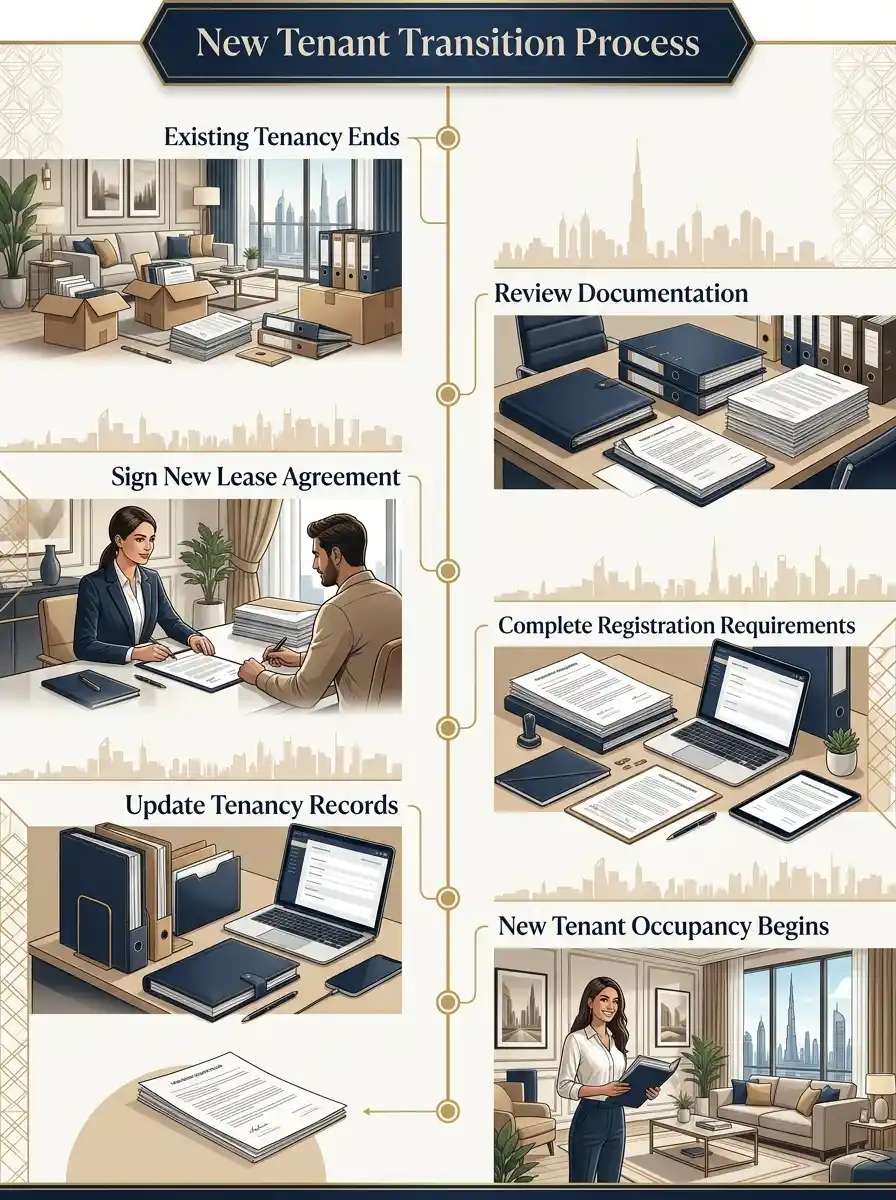
Step 1: Existing Tenancy Ends
The outgoing tenant completes the tenancy period and fulfills any contractual obligations.
Step 2: Documentation Is Reviewed
Relevant tenancy records and supporting documents are prepared.
Step 3: New Lease Agreement Is Signed
The landlord and incoming tenant enter into a new tenancy agreement.
Step 4: Registration Requirements Are Completed
The new tenancy information is submitted through approved registration channels.
Step 5: Updated Tenancy Records Are Issued
The tenancy registration reflects the new agreement and occupancy details.
Following the correct process helps ensure continuity and compliance.
Why Accurate Tenancy Records Matter
Accurate tenancy records support many important services and applications, including a wide range of residential and administrative services.
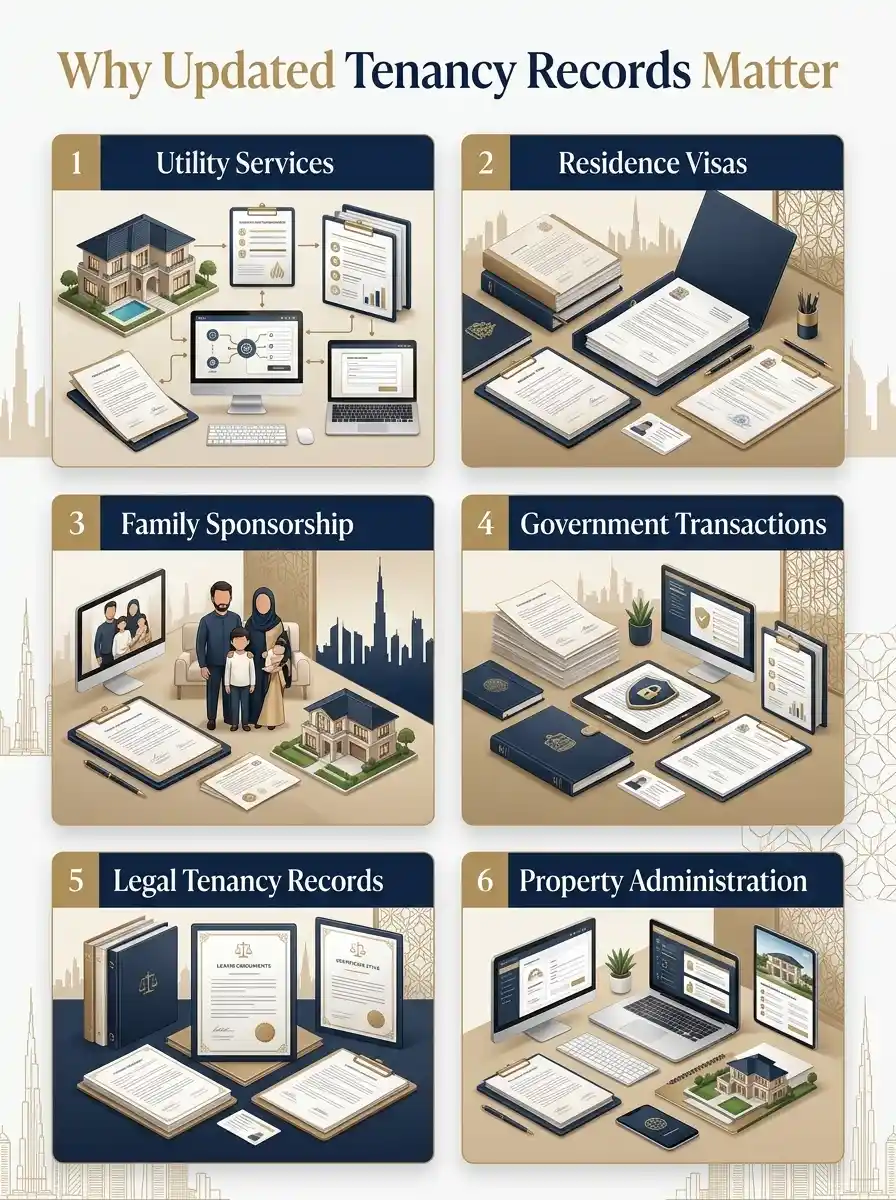
These include:
- Utility services
- Visa applications
- Family sponsorship
- Government transactions
- Legal tenancy documentation
Outdated records can create unnecessary complications for both landlords and tenants.
For this reason, tenancy changes should be reflected in registration records as soon as practical.
Common Mistakes During Tenant Changes
Several avoidable mistakes can create delays during tenancy transitions.
Delaying Registration Updates
Waiting too long to update records may affect future applications.
Using Outdated Documentation
Old tenancy information may not reflect the current occupancy arrangement.
Incomplete Records
Missing documents can slow the registration process.
Incorrect Occupancy Information
Tenant details should accurately match the current lease agreement.
Proper preparation helps reduce these issues.
How Tenant Changes Affect Utilities and Services
Many tenants overlook the impact tenancy changes can have on other services.
When occupancy changes, associated services may also require updates.
Examples include:
- Electricity services
- Water services
- Internet connections
- Residency-related applications
- Sponsorship documentation
Ensuring tenancy records are current helps support these related processes.
After obtaining updated tenancy documentation, residents may also use it when completing utility-related procedures through DEWA and other service providers.
The Importance of Using Approved Registration Channels
Whenever tenancy information changes, it is important to use approved registration channels.
This helps ensure:
- Accurate records
- Regulatory compliance
- Proper documentation
- Reliable processing
- Official tenancy registration
For official information regarding tenancy registration requirements and tenancy-related services, residents can refer to the Dubai Land Department (DLD), which oversees Dubai’s tenancy registration framework and real estate records.
Using trusted service providers helps reduce administrative errors and improve processing efficiency.
Why Professional Assistance Can Help
Tenant transitions often involve multiple documents, deadlines, and administrative requirements.
Professional assistance can help with:
- Registration guidance
- Documentation review
- Record updates
- Administrative support
- Compliance requirements
This support can simplify the process for landlords and tenants alike.
Conclusion
Understanding how to transfer Ejari during a tenancy change is important for maintaining accurate tenancy records and avoiding administrative complications. While many residents refer to the process as a transfer Ejari request, the key objective is ensuring that registration records accurately reflect the current tenancy agreement and occupancy details.
Whether you are a landlord preparing for a new tenant or an occupant moving into a property, following the correct tenancy transfer in Dubai procedures helps support smoother utility activation, residency applications, and tenancy management. If you need assistance with tenancy registration updates, new Ejari registrations, or tenant transition support, Ejari Meydan can help ensure the process is handled efficiently and professionally.
FAQs
Can Ejari be transferred to another tenant?
When a tenancy changes, registration records generally need to reflect the new lease agreement and tenant information rather than continuing under outdated occupancy details.
What happens after moving out of a rental property?
Tenants may need to complete tenancy obligations, update service accounts, and ensure tenancy records reflect the change in occupancy.
Does a new tenant need updated tenancy registration?
Accurate tenancy records should reflect the current tenancy agreement and occupant information.
How does tenancy transfer in Dubai affect utility services?
Changes in tenancy may require corresponding updates to utility-related records and service accounts.
Why is it important to update tenancy records after a tenant change?
Updated records help support visa applications, sponsorship requests, utility activation, and other administrative procedures.