
Every tenancy in Dubai depends on accurate paperwork, and one detail that often gets overlooked is how closely Ejari and Emirates ID records are tied together. Your Emirates ID is not just a formality on the application form. It is the identity anchor behind your entire tenancy record. This guide explains exactly why the Ejari and Emirates ID link matters and what to do if your details change.
Why Does My Ejari Registration Need to Be Linked to My Emirates ID?
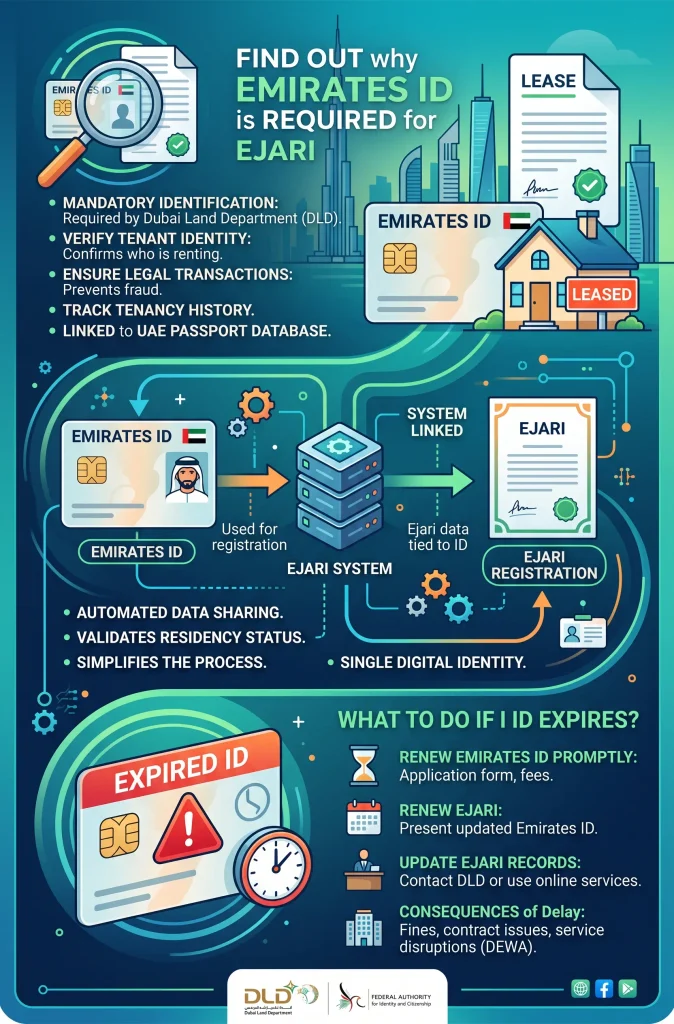
The connection between Ejari and Emirates ID details exists for a simple reason: it confirms exactly who is renting the property. Here is why this matters so much:
- Your Emirates ID is the official proof of identity recognized across all government and semi-government services in the UAE
- Linking it to Ejari ensures the tenancy record cannot be confused with another person who has a similar name
- It creates a reliable, verifiable link between the tenant, the landlord, and the property
- This connection is used again later for DEWA connections, visa processes, and school registration.
Without this link, a tenancy contract would have far less legal weight, since there would be no clear, verifiable way to confirm who actually signed the agreement.
Is Emirates ID Mandatory for Ejari?
Yes, it is required. Ejari ID requirements Dubai rules are clear that a valid Emirates ID must be provided during registration for any tenant who holds UAE residency.
Here is what you should know:
- Both the tenant and landlord typically need to provide Emirates ID copies, unless the landlord is a company, in which case a trade license is used instead
- New residents who do not yet have an Emirates ID may need to use their passport temporarily, though this can create delays
- The Emirates ID number entered during registration must match official records exactly, including spelling and formatting
- Any mismatch between the Emirates ID and the tenancy contract can cause the Ejari application to be rejected or delayed
Because of these strict Ejari ID requirements that Dubai authorities apply, it is always worth double-checking your Emirates ID details before submitting any Ejari application. Meeting these Ejari ID requirements Dubai expects from the start prevents unnecessary rejections.
What If My ID Expires After Ejari?
This is a common concern, especially for tenants on longer lease terms. Here is what generally happens:
- Ejari registration itself usually remains valid even if your Emirates ID expires afterward, since the record reflects the details at the time of registration
- However, if you need to make changes to your tenancy contract, renew it, or handle a dispute, you will likely need to present a valid, unexpired Emirates ID
- Landlords and property managers may also request updated Emirates ID copies periodically, especially at renewal time
- Keeping your Emirates ID renewed and current avoids unnecessary delays whenever you need to interact with Ejari-related services again
It is a good habit to renew your Emirates ID well before it expires, rather than waiting until you urgently need it for a tenancy matter.
Can I Register Without Emirates ID?
In most cases, no, not if you are a UAE resident. Emirates ID is considered a core requirement for Emirates ID Ejari registration to move forward smoothly.
That said, there are a few exceptions and special situations for Emirates ID Ejari registration:
- New tenants who have just arrived and are waiting for their Emirates ID may sometimes use a passport copy along with an Emirates ID application receipt
- Visitors or non-residents in specific commercial arrangements may follow a different process depending on the property type
- Even in exception cases, the Emirates ID is usually still required soon after issuance to fully complete the registration
Trying to register without any form of valid identification is not something typing centres or online systems will generally accept, since it goes against the basic verification purpose of Ejari and Emirates ID linking in the first place.
How Do I Update It on Ejari?
If your Emirates ID details change, such as after renewal or a correction, updating your Ejari record is a straightforward process. Here is how to update Ejari and Emirates ID information correctly:
Step 1: Gather your updated Emirates ID copy
- Make sure the new copy is clear and fully legible.
Step 2: Confirm which details have changed
- This could be the expiry date, a spelling correction, or a new ID number if reissued.
Step 3: Visit an approved typing centre or use the Dubai REST app
- Submit the updated Emirates ID along with your existing Ejari certificate details.
Step 4: Verify the updated information
- Double check the new Ejari record reflects the corrected or renewed Emirates ID accurately.
Step 5: Keep a copy of the updated certificate
- This becomes your new reference for any future dealings tied to the tenancy.
Taking care of this promptly, and knowing how to update Ejari and Emirates ID details whenever they change, avoids complications later, especially if you need the record for a dispute, renewal, or utility connection.
Why Ejari Identity Verification Matters So Much
Beyond the paperwork itself, Ejari identity verification plays a much bigger role in protecting everyone involved in a tenancy. Here is what is really at stake:
- It prevents fraudulent tenancy claims by confirming the real identity behind the contract
- It protects landlords from disputes involving unclear or fake tenant identities
- It protects tenants by creating an official, traceable record of their rental history
- It supports smoother processing for related services like DEWA, visas, and schooling, since all these systems rely on consistent identity data
This is exactly why getting these details right from the very beginning saves so much hassle later.
Common Mistakes to Avoid
- Submitting an expired Emirates ID copy during registration
- Entering the Emirates ID number incorrectly, even by a single digit
- Forgetting to update Ejari after renewing an expired Emirates ID
- Assuming an old Emirates ID copy is still acceptable for a renewal or dispute
- Not checking that the name on the Emirates ID matches the tenancy contract exactly
Quick Checklist for Ejari Emirates and ID Accuracy
- Confirm your Emirates ID is valid and not expired before registering
- Double-check the ID number matches exactly across all documents
- Update your Ejari record promptly after any Emirates ID renewal or correction
- Keep both digital and physical copies of your current Emirates ID
- Reach out for help if you are unsure whether your details need updating
Conclusion
Understanding how Ejari Emirates and ID linking works helps you avoid unnecessary delays and complications throughout your tenancy. From registration to renewal, and from disputes to utility connections, having accurate and current identity details tied to your Ejari record makes everything move more smoothly. Taking a few minutes to confirm your details are correct now can save a lot of frustration later.
Not sure if your Emirates ID details are correctly linked to your Ejari record? Visit Ejari Meydan today for expert help confirming and updating your registration details quickly and accurately.
FAQs
Does my Emirates ID need to match my tenancy contract exactly?
Yes, the name and ID number should match exactly across all documents to avoid delays or rejection during registration.
What happens if I lose my Emirates ID during my tenancy?
You should apply for a replacement as soon as possible and update your Ejari record once the new ID is issued.
Can I use my Emirates ID application receipt instead of the actual card?
In some cases, a receipt may be accepted temporarily, though it is best to confirm with the typing centre or service provider handling your registration.
Is Emirates ID required for both the tenant and landlord?
Yes, unless the landlord is a company, in which case a trade license is typically used instead of an individual Emirates ID.
How quickly should I update Ejari after renewing my Emirates ID?
It is best to update your record as soon as possible, especially before any renewal, dispute, or service that relies on accurate identity details.