
Anyone comparing rental options in Dubai eventually runs into the question of how short a lease can actually be. Understanding the minimum Ejari lease term matters whether you are a tenant looking for flexibility or a landlord deciding how to structure a contract. This guide breaks down the minimum Ejari lease term rules, where short lets fit in, and what to expect when registering your agreement.
What Is the Minimum Ejari Lease Term?
According to official Dubai Land Department guidance, the standard minimum Ejari lease term for a registered residential tenancy is one year. This has become the default structure for most rentals across the city, and it is the format tenants and landlords encounter most often when signing a standard contract and registering it through the platform.
That said, understanding the minimum Ejari lease term fully also means recognizing that Dubai rental practices have evolved, and not every agreement in the market follows the traditional twelve-month structure exactly.
Ejari One Year Minimum Explained
The commonly cited Ejari one-year minimum reflects the historical default rather than a rigid cap on every possible lease length. Most residential contracts in Dubai are still signed for twelve months, largely because this became standard practice over the years rather than because longer or shorter terms are legally forbidden. The Ejari one-year minimum is what most tenants should expect when searching for typical apartment or villa rentals.
It is worth noting that some legal sources describe flexibility below this threshold in specific circumstances, so anyone considering a shorter arrangement should confirm directly with their landlord or a property professional before assuming standard registration terms apply.
Can I Register an Ejari Contract for Less Than One Year?
This depends on the nature of the agreement. Standard long-term residential contracts registered through Ejari generally follow the one-year structure, but short-term furnished rentals exist separately in the market, often aimed at professionals on temporary assignments or those relocating for a few months. These shorter arrangements are typically treated differently from standard yearly contracts and may not always require the same formal Ejari registration process as a long-term lease.
If your goal is a short stay rather than a long-term rental, it is best to clarify with the landlord or agent whether the unit is being offered as a short-term furnished rental or a standard yearly tenancy, since the registration requirements differ.
Minimum Tenancy Contract Dubai Standards
Looking at the broader picture, minimum tenancy contract Dubai rules are shaped by long-standing rental practices as much as by specific regulations. The minimum tenancy contract Dubai structure most renters encounter is the twelve-month agreement, largely because landlords have historically preferred annual terms with post-dated rent cheques spread across the year.
Longer contracts are also increasingly common, with some landlords offering multi year agreements of two, three, or even up to ten years, which can still be registered and treated under the same regulatory framework as a standard one year term.
Ejari Contract Duration Options
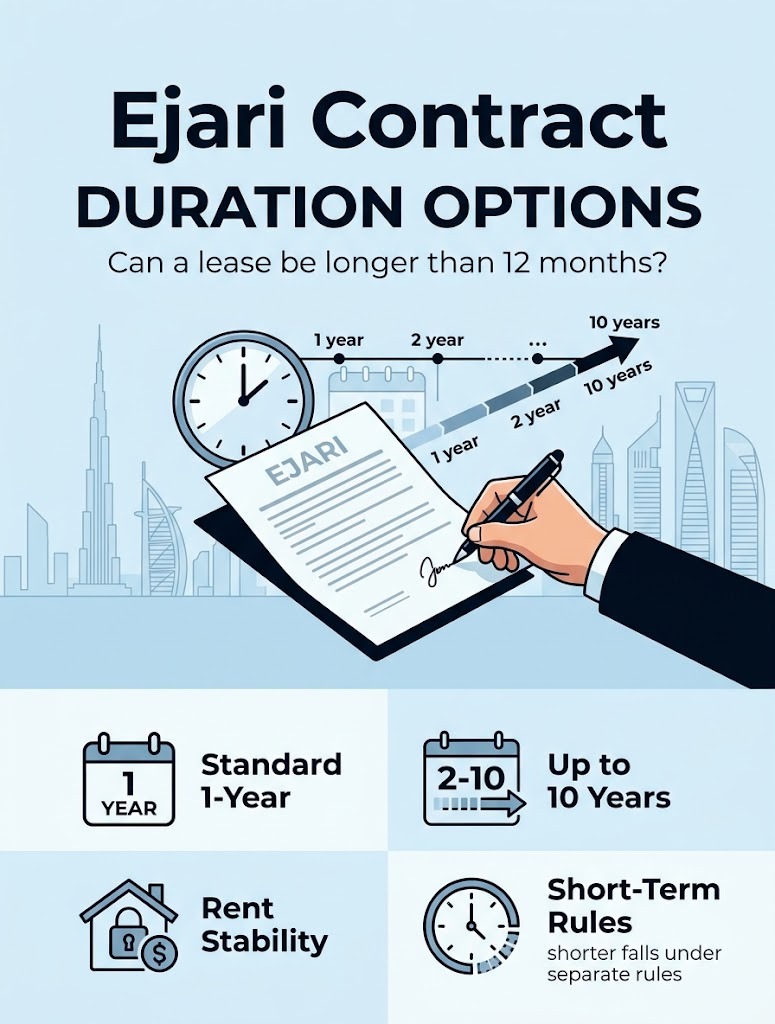
Beyond the standard twelve months, Ejari contract duration can actually extend well past a single year if both parties agree. Tenants sometimes prefer longer Ejari contract duration agreements because they lock in a fixed rent and reduce the uncertainty of annual renewal negotiations. A longer Ejari contract duration can also offer more protection against mid-term rent increases, since the terms remain fixed for the length of the agreement rather than being revisited every twelve months.
Key points to understand about Ejari contract duration include:
- Standard residential leases are most commonly set at one year
- Longer agreements of two to ten years are possible and can still be registered
- A longer term can offer more rent stability throughout the agreement
- Shorter arrangements typically fall under separate short-term rental categories
Short Lease Ejari Arrangements
For tenants who only need accommodation for a matter of months, short lease Ejari-style furnished rentals are available, particularly in buildings designed for business travelers or temporary residents. These short lease Ejari-style units often come with simplified terms, flexible payment schedules, and fewer long-term commitments compared to a standard yearly tenancy.
However, it is important to understand that short lease Ejari arrangements may differ significantly in how they are documented compared to a traditional twelve-month contract, so tenants should always ask directly whether the unit comes with a standard registered tenancy or a separate short stay agreement.
Why the One Year Standard Became the Norm
The preference for twelve month agreements largely developed from how rent payments were historically structured in Dubai, with landlords collecting a handful of post dated cheques spread across the year rather than monthly transfers. This payment pattern naturally aligned with a one-year cycle, reinforcing the minimum Ejari lease term as the default even though nothing in the regulations strictly limits agreements to that exact length.
What This Means for Tenants and Landlords
Whether you are negotiating a new lease or considering a longer term agreement, understanding how contract length interacts with registration helps you make better decisions. Tenants benefit from knowing that longer agreements are an option for added stability, while landlords benefit from understanding that flexibility exists beyond the traditional twelve-month pattern, provided both parties agree to the terms in writing.
Conclusion
The minimum Ejari lease term most tenants will encounter in Dubai remains the standard one-year structure, though longer agreements and separate short-stay rental options exist depending on your needs. Understanding these distinctions before signing helps you choose the right type of agreement and avoid confusion during registration.
If you have questions about lease length or need help registering your tenancy contract, reach out to the team at Ejari Meydan for guidance tailored to your situation.
Frequently Asked Questions
What is the most common lease length for Ejari registration in Dubai?
The vast majority of standard residential contracts are registered for one year, which remains the default structure most tenants encounter.
Can I sign a lease longer than one year and still register it?
Yes, longer agreements of two years or more can still be registered and are treated under the same regulatory framework as a standard annual contract.
Are short-term furnished rentals treated the same as standard leases?
Not always. Short-term furnished rentals are often structured differently from standard yearly contracts, so it is best to confirm the terms directly with the landlord or agent.
Why do most Dubai leases default to one year instead of shorter terms?
This largely stems from historical rent payment practices involving post-dated cheques, which naturally aligned with an annual cycle over time.
Does a longer lease term offer any benefit to tenants?
Yes, a longer agreement can provide more stability by locking in rent terms and reducing how often renewal negotiations need to happen.