

Understanding the most common Ejari rejection reasons can save tenants and landlords significant time, money, and frustration. Many residents assume that submitting a tenancy contract is enough to complete the registration process. However, even minor documentation errors or incorrect information can result in a rejected application. A rejected registration may delay utility activation, visa-related services, tenancy renewals, and other important processes. The team at Ejari Meydan regularly assists applicants in identifying and correcting issues before submission, helping ensure a smoother registration experience.
Why Do Ejari Applications Get Rejected?
Ejari registration is designed to verify the legitimacy of a tenancy agreement and ensure that all information matches official government records.
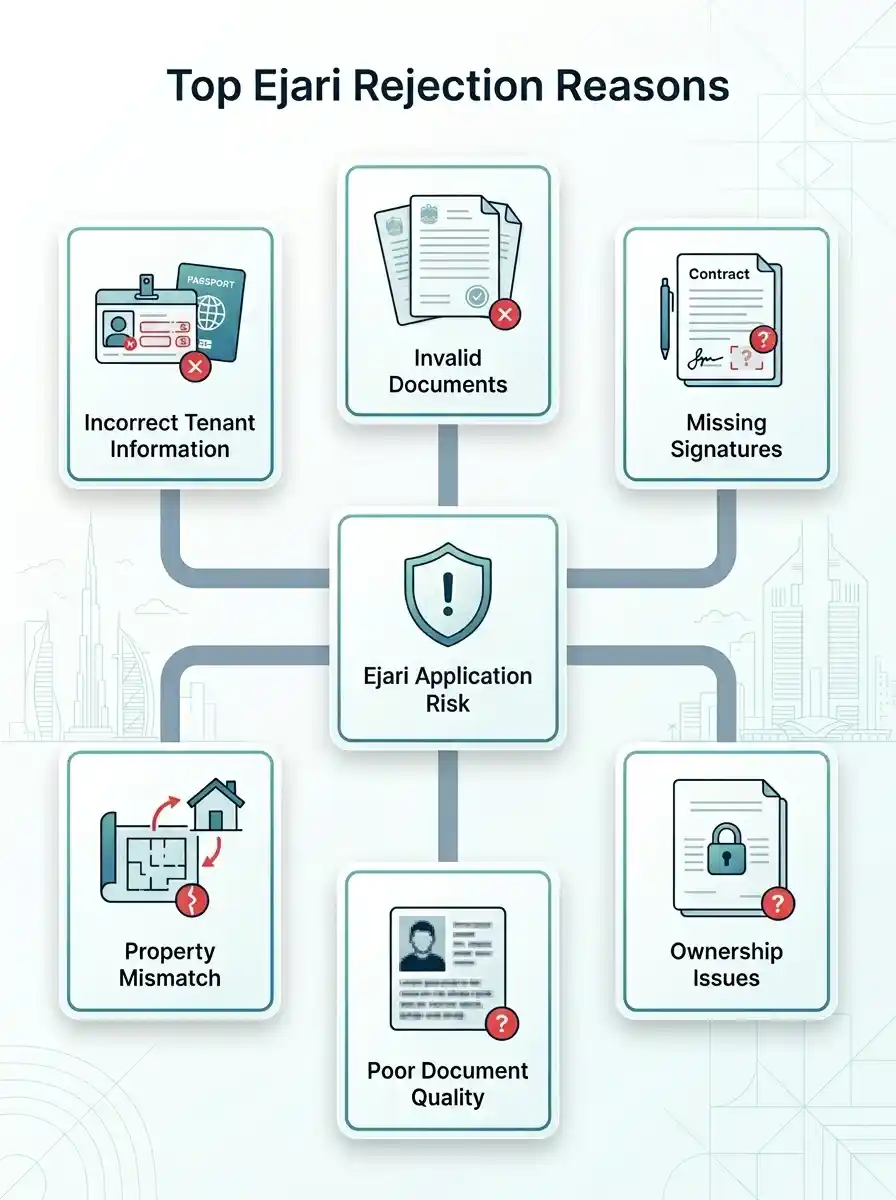
Because of this verification process, applications may be rejected if:
- Documents are incomplete
- Information is inaccurate
- Ownership records do not match
- Required signatures are missing
- Identification documents are invalid
Many Ejari rejection reasons are preventable when applicants carefully review their paperwork before submission.
Incorrect Tenant Information
One of the most common causes of registration failure involves inaccurate tenant details.
How Incorrect Information Creates Ejari Approval Issues
The information provided on the tenancy agreement must match official identification documents.
Common mistakes include:
- Misspelled names
- Incorrect passport numbers
- Wrong Emirates ID details
- Outdated contact information
- Mismatched residency information
Even a small discrepancy can trigger verification problems and result in a rejected application.
Before submission, applicants should carefully compare all information against their official documents.
Missing Signatures on the Tenancy Contract
A tenancy agreement is only considered valid when all required parties have properly signed the document.
Why Signatures Matter
Authorities use signatures to confirm that:
- The tenant agrees to the contract
- The landlord accepts the terms
- The lease is legally binding
- Both parties acknowledge their responsibilities
Missing signatures remain one of the easiest Ejari registration mistakes to avoid, yet they continue to cause numerous delays each year.
Always review every page of the tenancy agreement before submission.
Expired Emirates ID or Identification Documents
Valid identification documents are essential for successful registration.
Document Validity Requirements
Authorities may reject applications when:
- Emirates IDs have expired
- Passport copies are outdated
- Residency documents are invalid
- Identification scans are unclear
These documentation problems frequently appear among the top Ejari rejection reasons because the registration system relies heavily on identity verification.
Applicants should ensure that all identification documents remain current and clearly readable.
Incomplete Documentation
Submitting incomplete paperwork is another leading cause of registration delays and rejection.
Common Missing Documents
Applications may be rejected when applicants fail to provide:
- Emirates ID copies
- Passport copies
- Title deed documentation
- Signed tenancy contracts
- Supporting authorization documents
Many tenants begin the process without first confirming which documents are required.
Preparing all documentation in advance can significantly improve approval chances.
Mismatched Property Information
Property details must accurately match official ownership records maintained by government authorities.
Property Verification Problems
Issues often occur when:
- Unit numbers are incorrect
- Property information is outdated
- Ownership records differ from submitted information
- Tenancy details do not match official records
These Ejari approval issues may require additional verification before registration can proceed.
Working with experienced professionals can help identify these inconsistencies before submission.
Invalid or Missing Title Deed Information
The title deed serves as proof of ownership and plays a critical role during registration.
Why Ownership Verification Matters
The title deed helps authorities confirm:
- Property ownership
- Landlord authorization
- Unit details
- Legal leasing rights
If ownership documentation is missing, incomplete, or inconsistent, the application may be rejected until the issue is resolved.
This remains one of the most important Ejari rejection reasons affecting both tenants and landlords.
Incorrect DEWA Premise Number
Many applicants overlook the importance of the DEWA premise number.
How DEWA Information Affects Registration
The premise number helps link:
- Utility records
- Property information
- Tenant occupancy details
An incorrect number can create verification conflicts that delay approval.
Before submitting your application, verify that all utility-related information matches the property’s official records.
Poor Quality Document Scans
Digital submissions require clear and readable documentation.
Common Scanning Mistakes
Applications may be delayed when documents are:
- Blurry
- Cropped
- Incomplete
- Difficult to read
- Missing pages
Although this seems like a minor issue, poor-quality scans frequently contribute to Ejari errors and additional review requests.
Providing high-resolution copies can help prevent unnecessary delays.
Unauthorized Representatives
In some cases, applications are submitted by property managers, agents, or representatives acting on behalf of a landlord.
Authorization Requirements
If a representative submits the application, authorities may require:
- Power of attorney documents
- Authorization letters
- Supporting identification
Failure to provide proper authorization can result in a rejected application until supporting documentation is supplied.
Errors During Lease Renewal
Renewal applications can also face rejection when updated information is not properly documented.
Common Renewal Mistakes
These include:
- Using outdated contracts
- Submitting expired documents
- Incorrect tenant information
- Missing renewal details
- Unverified contract amendments
Although renewals may appear simpler than first-time registrations, they still require accurate and complete information.
How to Avoid Ejari Registration Mistakes
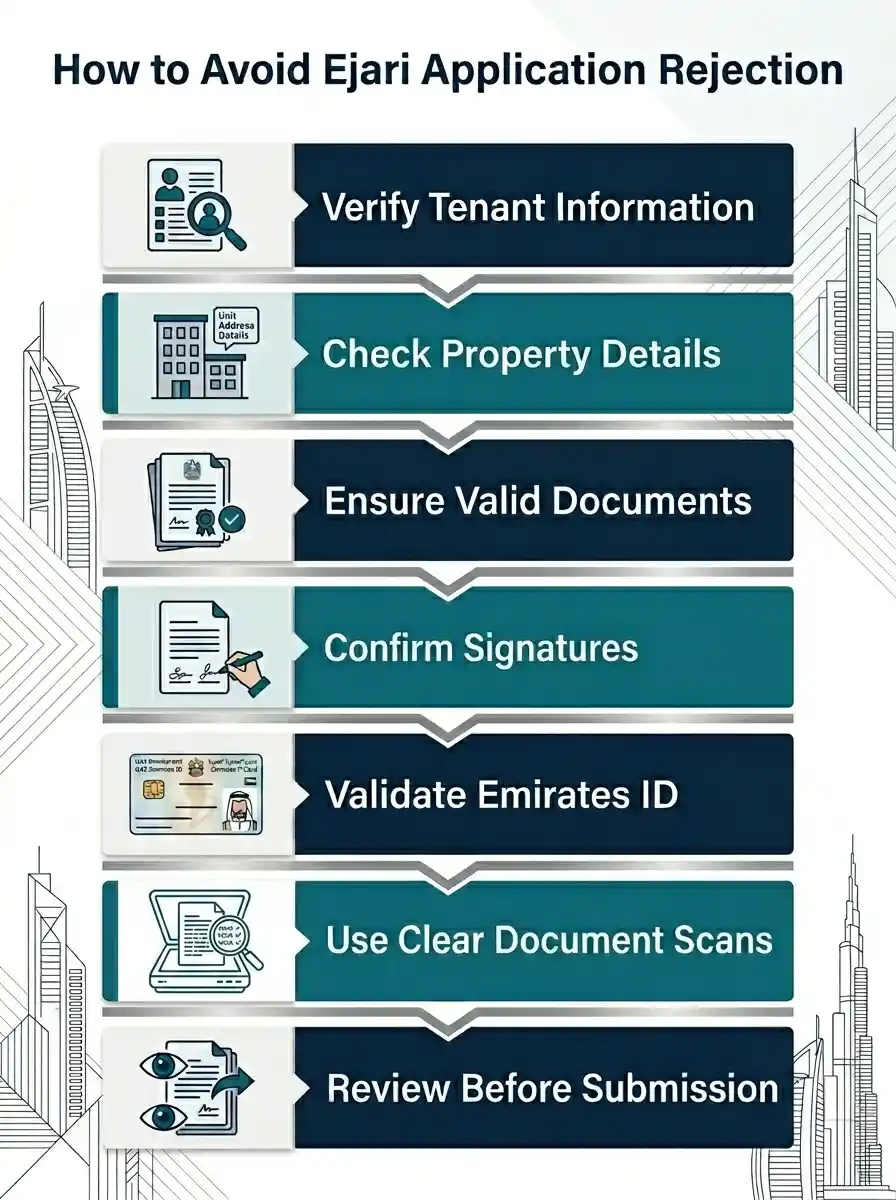
Most registration problems can be prevented through careful preparation.
First-Time Tenants Should Understand the Ejari Registration Process
If you are registering Ejari for the first time, understanding the complete process before submitting your documents can help you avoid many of the mistakes that lead to rejection. From preparing the required documents and checking tenancy details to completing the registration and understanding what happens afterward, first-time tenants should know what to expect at each stage. Our First-Time Tenant Guide to Ejari Registration provides a step-by-step overview of the process and practical information to help new tenants complete their Ejari registration with greater confidence.
Best Practices Before Submission
To reduce the risk of rejection:
- Review all documents thoroughly
- Verify tenant information
- Confirm landlord records
- Check property details
- Ensure signatures are complete
- Use clear document scans
- Verify identification validity
Following these steps helps minimize Ejari registration mistakes and improves approval success rates.
Why Professional Assistance Can Help
Many applicants only discover problems after receiving a rejection notice.
The team at Ejari Meydan helps residents:
- Review documentation
- Verify tenancy details
- Identify missing information
- Resolve registration issues
- Avoid common submission errors
Our professional services and support can significantly reduce the likelihood of delays and rejected applications.
Conclusion
Understanding the most common Ejari rejection reasons can help tenants and landlords complete the registration process more efficiently. Issues such as incorrect tenant information, missing signatures, incomplete documentation, ownership verification problems, and poor-quality document scans continue to be among the leading causes of rejected applications. Fortunately, most of these problems can be prevented through careful preparation and document review. If you are preparing to register or renew your tenancy agreement, the team at Ejari Meydan can help verify your paperwork, prevent costly mistakes, and ensure a smoother registration process from start to finish.
FAQs
What is the most common reason an Ejari application gets rejected?
Incorrect tenant information and incomplete documentation are among the most common causes of rejection.
Can expired Emirates IDs cause Ejari rejection?
Yes. Valid identification documents are generally required during the registration process.
What should I do if my Ejari application is rejected?
Review the rejection reason, correct the issue, and resubmit the application with the required documentation.
Can incorrect property information delay approval?
Yes. Property details must match official ownership records to avoid verification issues.
How can I avoid Ejari registration mistakes?
Verify all information, prepare complete documentation, use clear scans, and review the application carefully before submission.